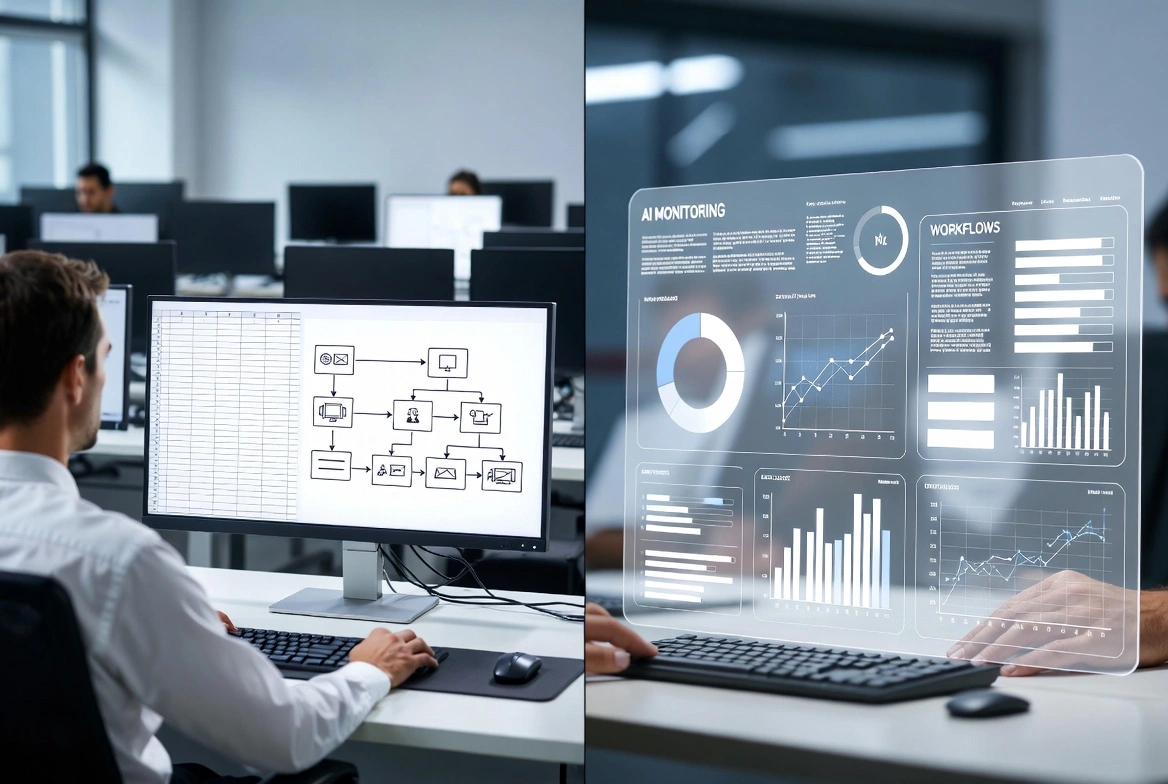
Key Takeaway: Agentic AI and traditional automation solve fundamentally different problems. Traditional automation follows fixed rules to handle repetitive tasks. Agentic AI takes initiative - monitoring workflows, anticipating issues, and making decisions independently. According to McKinsey, businesses adopting AI-driven approaches see 20-25% productivity gains over rule-based automation alone.
- What Is Traditional Automation?
- What Is Agentic AI?
- How Does Agentic AI Differ from Traditional Automation?
- When Should Your Business Use Traditional Automation vs Agentic AI?
- What Are Real-World Examples of Agentic AI in Business?
- How Do You Know If Your Business Is Ready for Agentic AI?
- Frequently Asked Questions
What Is Traditional Automation?
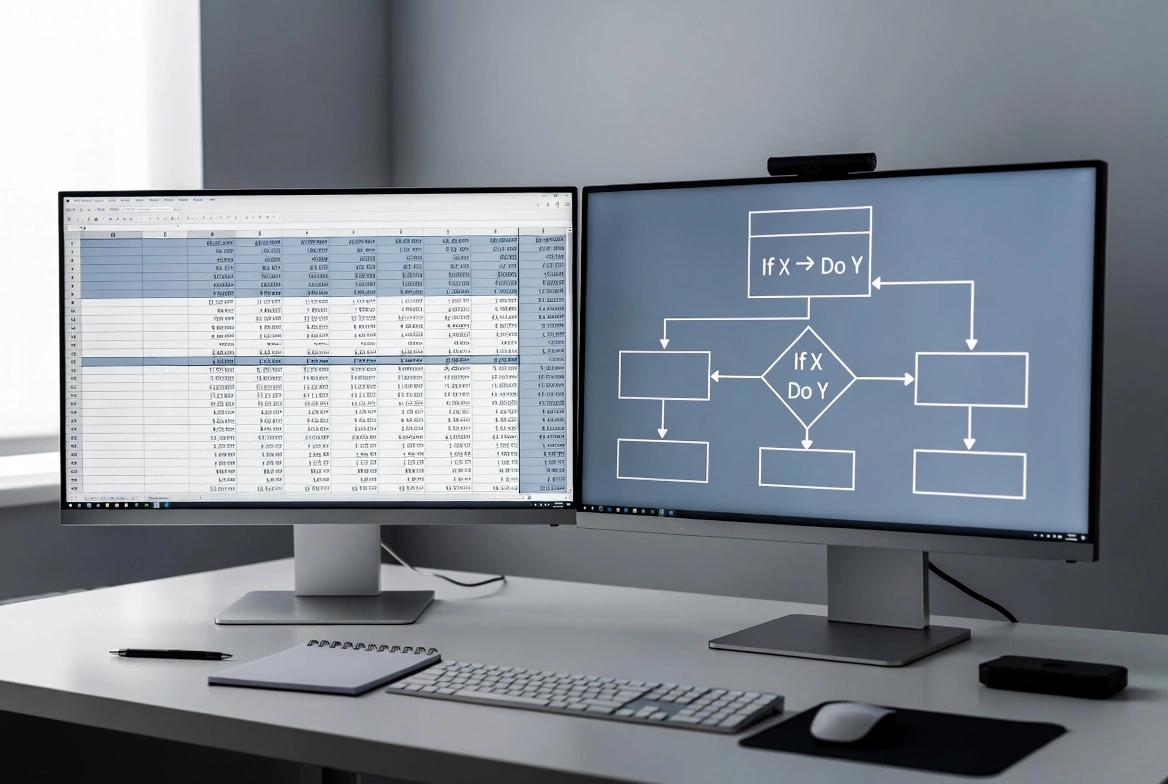
Traditional automation executes predefined tasks based on fixed rules - if X happens, do Y. It's the digital equivalent of an assembly line: reliable, predictable, and efficient within a narrow scope.
Robotic Process Automation (RPA) is the most common form. RPA bots log into systems, copy data between spreadsheets, generate reports, and process invoices without human intervention. According to Gartner, the global RPA market reached $3.6 billion in 2024, reflecting just how widely businesses have adopted this approach.
Traditional automation excels at:
- Data entry and transfer between systems
- Invoice processing and accounts payable
- Report generation on set schedules
- Email sorting and routing
- Form filling and document handling
The limitation is clear. Traditional automation breaks when conditions change. If a vendor sends an invoice in a new format, the bot stalls. If an exception falls outside its rules, it stops and waits for a human. For businesses with highly standardized processes, this tradeoff is acceptable. But for companies dealing with variability, exceptions, and rapid change, it becomes a bottleneck.
What Is Agentic AI?
Agentic AI refers to AI systems that don't just respond to commands - they take initiative. These systems monitor workflows, anticipate problems, suggest solutions, and act proactively without waiting for human instructions.
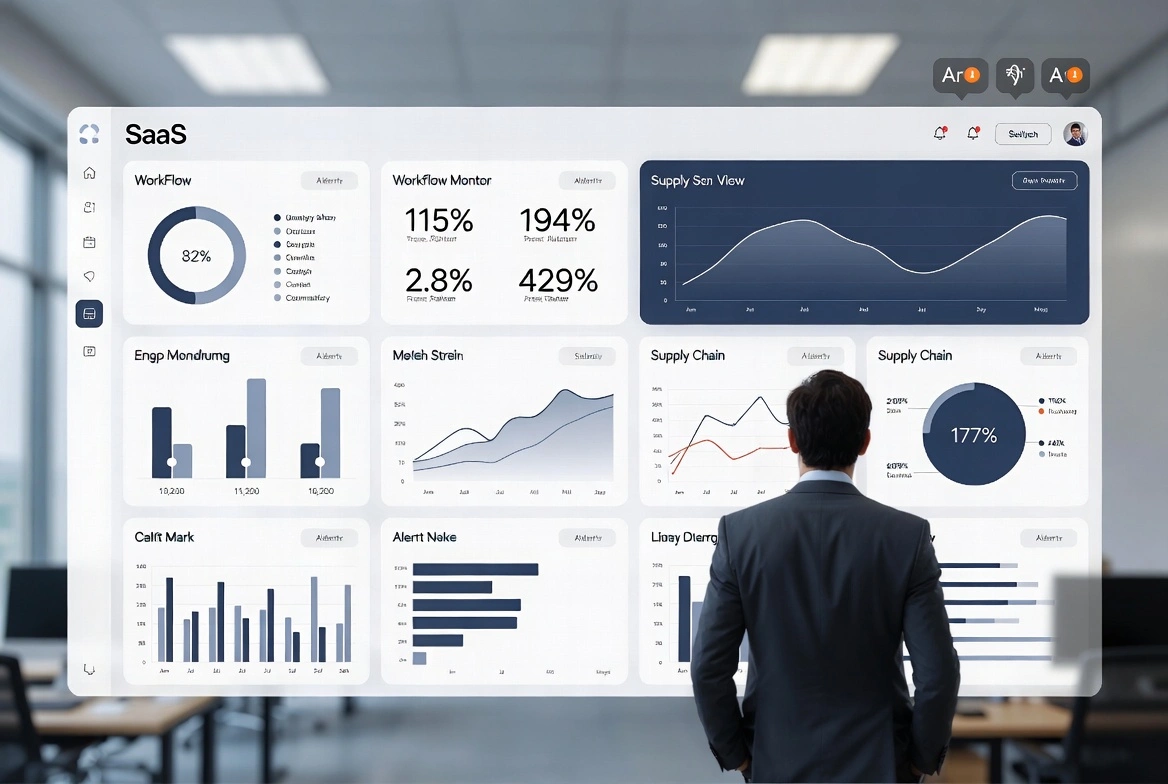
Think of the difference this way: traditional automation is a factory robot welding the same joint thousands of times. Agentic AI is an experienced operations manager who notices a supply chain delay, adjusts production schedules, notifies the team, and contacts an alternate supplier - all before anyone asks.
At Tizbi, we build agentic AI solutions for SMBs around these core capabilities:
- Monitoring business workflows in real-time
- Anticipating problems before they escalate
- Making routine decisions autonomously
- Learning from outcomes to improve over time
- Handling exceptions and edge cases intelligently
- Communicating with team members proactively
According to Deloitte’s State of AI in the Enterprise report, the share of leaders reporting transformative AI impact has more than doubled year-over-year, with enterprises now deploying agentic AI agents across functions from customer service to manufacturing. That adoption momentum is reaching small and midsize businesses too, not just enterprises with massive budgets.
How Does Agentic AI Differ from Traditional Automation?
The core difference is initiative. Traditional automation waits for triggers and follows scripts. Agentic AI observes, reasons, and acts.
| Capability | Traditional Automation | Agentic AI |
|---|---|---|
| Decision-making | Follows predefined rules | Reasons through options, chooses best action |
| Exception handling | Stops and flags for human review | Resolves most exceptions independently |
| Learning | Static - does the same thing every time | Improves performance based on outcomes |
| Scope | Single task or process | Cross-functional workflow management |
| Adaptability | Breaks when inputs change | Adapts to new conditions dynamically |
| Human interaction | None until it fails | Proactively communicates updates |
These differences aren't just theoretical — they show up in day-to-day operations. Consider a practical example from accounts payable. Traditional RPA extracts data from invoices that match a specific template. When a vendor changes their invoice layout, the bot fails. Agentic AI recognizes the new format, adapts its extraction logic, processes the invoice, and flags the change for the finance team - no downtime, no missed payments.
When Should Your Business Use Traditional Automation vs Agentic AI?
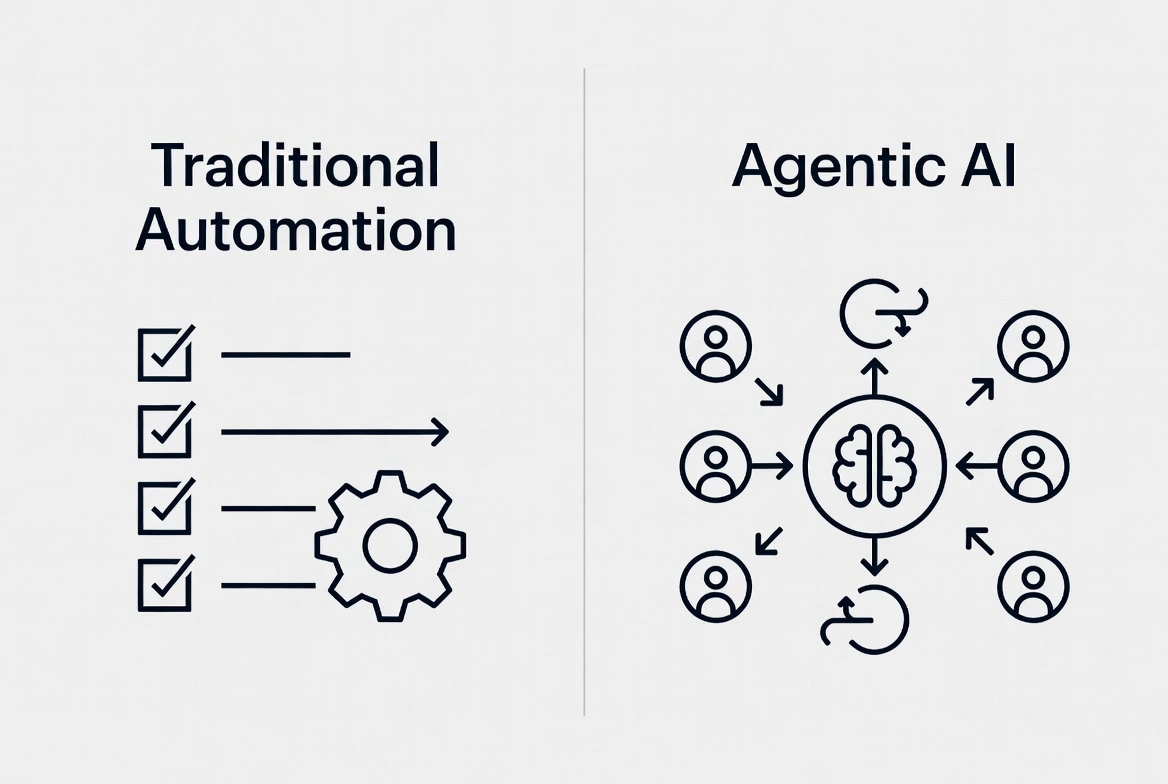
Traditional automation remains the right choice for high-volume, perfectly predictable tasks where rules never change. If your process is identical every time - generating the same report, moving data between the same fields - RPA delivers fast ROI with lower implementation costs.
Agentic AI makes sense when your processes involve:
- Frequent exceptions that require judgment calls
- Cross-system decisions spanning multiple departments
- Dynamic conditions that change regularly
- Customer-facing interactions requiring nuance
- Complex workflows where context matters
For most growing businesses, the answer isn't either/or. According to Forrester, organizations that combine RPA with AI-driven orchestration see 20% higher revenue impact than those using RPA alone - with operational efficiency gains widening as AI capabilities mature.
The practical starting point: automate the predictable with RPA first. Then layer agentic AI on top for the work that requires reasoning. This phased approach - sometimes called intelligent process automation - reduces risk, delivers quick wins from automation, and builds the data foundation that makes agentic AI more effective when you're ready to deploy it.
What Are Real-World Examples of Agentic AI in Business?
Agentic AI is already transforming how small and midsize businesses operate. Here are specific applications by function:
Customer Service: Instead of routing tickets through rigid decision trees, agentic AI reads customer messages, understands context from previous interactions, resolves straightforward issues immediately, and escalates complex cases with full context summaries for human agents.
Supply Chain Management: Agentic AI monitors supplier performance, predicts delivery delays based on logistics data, automatically adjusts orders, and recommends alternative suppliers before shortages hit production.

Financial Operations: Beyond basic invoice processing, agentic AI identifies spending anomalies, forecasts cash flow issues weeks in advance, and surfaces cost-optimization opportunities based on historical patterns.
HR and Recruiting: Agentic systems screen applications, identify top candidates based on success patterns from previous hires, schedule interviews, and flag potential retention risks among current employees.
At Tizbi, our AI-powered process automation delivers measurable results. In one freight routing project, agentic AI achieved 95% forecasting accuracy - dramatically reducing shipping costs and delivery delays for a midsize logistics company. In another engagement, AI-driven QA automation reached 97% data detection accuracy, catching defects that manual testing consistently missed.
How Do You Know If Your Business Is Ready for Agentic AI?
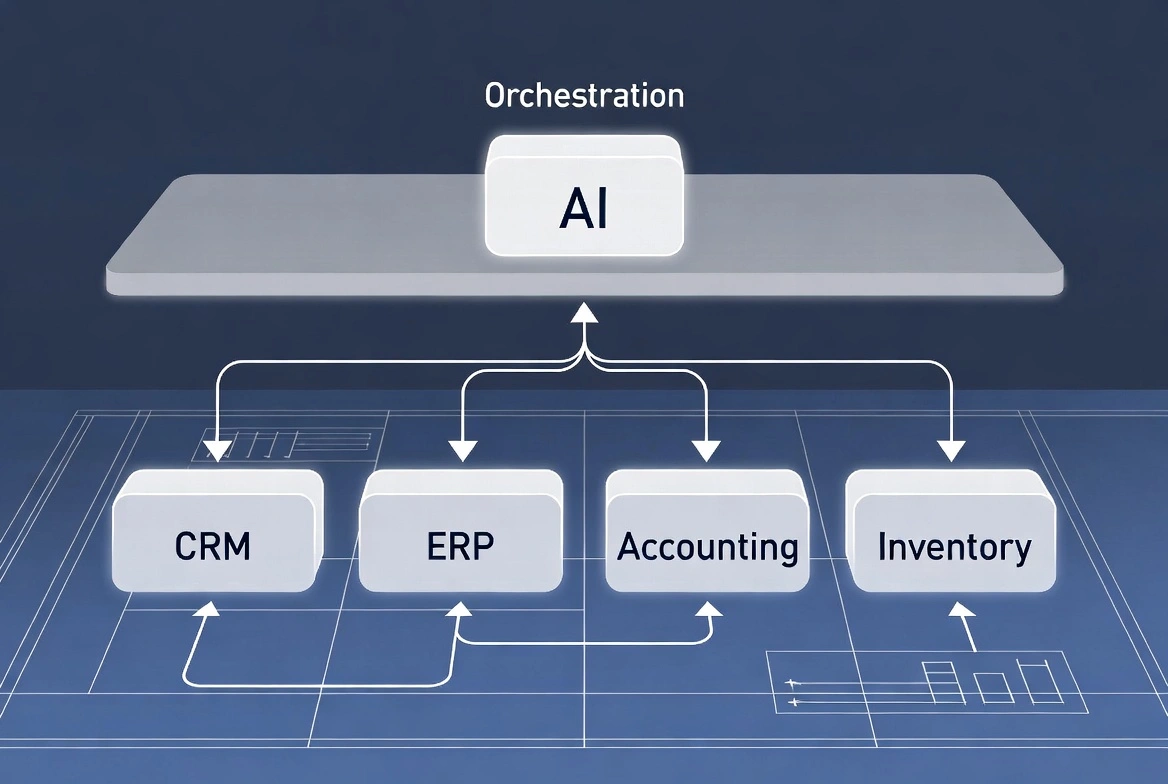
Not every business needs agentic AI right now - and a responsible partner will tell you that honestly. Here are the readiness indicators that matter.
You're ready if:
- Your core workflows are digital, not paper-based
- Your data is reasonably organized and accessible
- You've identified processes where exceptions slow your team down
- Your team spends significant time on decisions that follow patterns
- You're willing to start small with a pilot project
You should wait if:
- Core processes aren't documented or standardized
- Data lives in disconnected silos with no integration path
- You haven't yet automated basic repetitive tasks
The honest truth: sometimes the best first step isn't agentic AI - it's getting your data foundation right. Tizbi's AI consulting services start with a readiness assessment that evaluates your systems, workflows, and data. We identify exactly where AI can help and what groundwork needs to happen first. After 28 years of building software, we've learned that the technology is only as good as the foundation it runs on.
Frequently Asked Questions
Is agentic AI the same as artificial general intelligence (AGI)?
No. Agentic AI operates autonomously within specific business domains — it takes initiative and makes decisions, but within defined boundaries. AGI refers to hypothetical AI with human-level reasoning across all domains. Current agentic AI is powerful and practical but task-focused, not general-purpose.
Can agentic AI work with our existing software systems?
Yes. Agentic AI integrates with existing systems through APIs and data connectors — you don't need to replace your current software. Tizbi's AI legacy system modernization service specializes in adding intelligent capabilities to the tools businesses already use and depend on.
Will agentic AI replace our employees?
Agentic AI augments your team rather than replacing it. It handles routine decisions, repetitive monitoring, and pattern-based tasks so employees can focus on creative problem-solving, relationship-building, and strategic work that requires human judgment and empathy.
What's the difference between agentic AI and chatbots?
Chatbots are reactive - they respond when someone asks a question. Agentic AI is proactive - it monitors workflows, identifies issues, and takes action without being prompted. A chatbot answers your question about a delayed order. Agentic AI notices the delay and resolves it before you ask.
How long does it take to implement agentic AI?
A focused pilot project typically takes 8-12 weeks from assessment to deployment. Full organizational rollout across multiple departments spans 6-12 months, with each phase delivering incremental value. Tizbi's six-step All-In AI process is designed specifically for phased, low-risk deployment.
Ready to explore agentic AI for your business?
We'll evaluate your systems, workflows, and data - no hype, no jargon, just honest guidance from a team with 28 years of software expertise and 400+ successful projects behind us.
Written by the Tizbi Team
Tizbi is a custom software development and AI solutions company founded in 1998, with 400+ completed projects and a 99% client satisfaction rate. Our All-In AI practice helps small and midsize businesses implement agentic AI solutions built for real-world workflows. Learn more about Tizbi.