2026 marks a turning point for business AI. We've moved beyond the era of simple chatbots that answer FAQs. Today, AI agents orchestrate complex, end-to-end workflows semi-autonomously — handling everything from lead qualification to order management without constant human oversight.
The numbers reflect this shift. The global chatbot market has reached $10-11 billion in 2026, up from $7.8 billion just two years ago. Analysts project growth to $27 billion by 2030 and $61.69 billion by 2032. More significantly, 95% of customer service interactions are now AI-powered, and 80% of companies either use or plan to use AI-powered chatbots.
But here's the critical insight: Gartner predicts that 40% of agentic AI projects will be cancelled by the end of 2027 due to escalating costs, unclear business value, or inadequate implementation. The difference between success and failure isn't whether you adopt AI — it's how you build and deploy it. That's where custom chatbot development becomes essential.
Table of Contents
- The 2026 AI Landscape: From Chatbots to Autonomous Agents
- Why Custom Chatbot Development Matters More Than Ever
- Key Use Cases Driving Business Value in 2026
- 2026 Trends Shaping the Future of Conversational AI
- Measuring ROI: What Results Businesses Can Expect
- Common AI Implementation Mistakes to Avoid
- Frequently Asked Questions
- Ready to Build AI That Delivers Real Business Value?
The 2026 AI Landscape: From Chatbots to Autonomous Agents
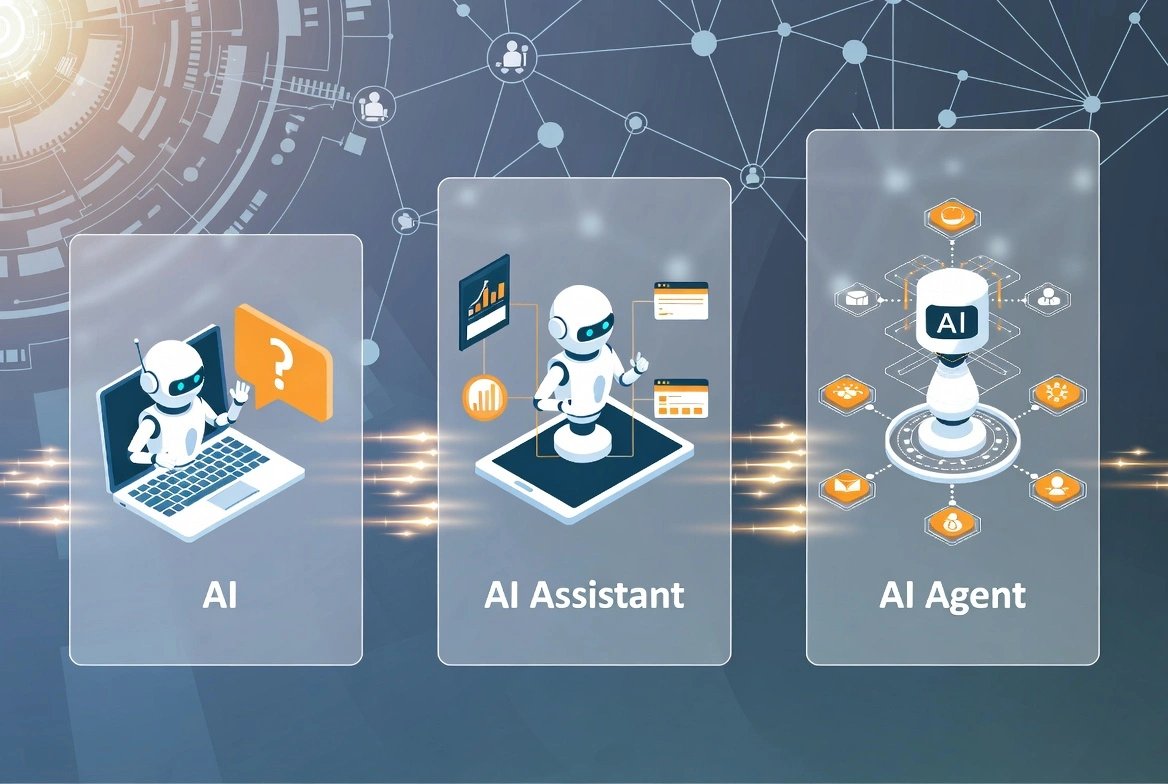
Ten years ago, a chatbot was a clunky pop-up offering scripted replies. Today, that same interface can troubleshoot issues, track orders, make appointments, negotiate with other AI systems, and execute complex multi-step workflows — all without human intervention.
Google Cloud's 2026 AI Agent Trends Report describes this as “the agent leap” — where AI orchestrates complex, end-to-end workflows semi-autonomously. According to Gartner, 40% of enterprise applications will embed AI agents by the end of 2026, up from less than 5% in 2025.
This evolution represents three distinct capability levels:
Conversational AI (Chatbots). Handle customer inquiries, qualify leads, provide information, and route requests. Today, 68% of social media inquiries are handled by bots before a human steps in, and 63% of B2B companies use chatbots for lead qualification.
AI Assistants. Go beyond conversation to complete tasks within defined parameters — scheduling meetings, processing orders, managing subscriptions, and handling routine administrative work.
Agentic AI. Autonomous systems that independently reason, plan, and execute multi-step workflows toward defined goals. They can make decisions, take actions across multiple systems, and learn from outcomes. Deloitte finds that 25% of companies using GenAI will run agentic pilots in 2026, growing to 50% by 2027.
Why Custom Development Matters More Than Ever
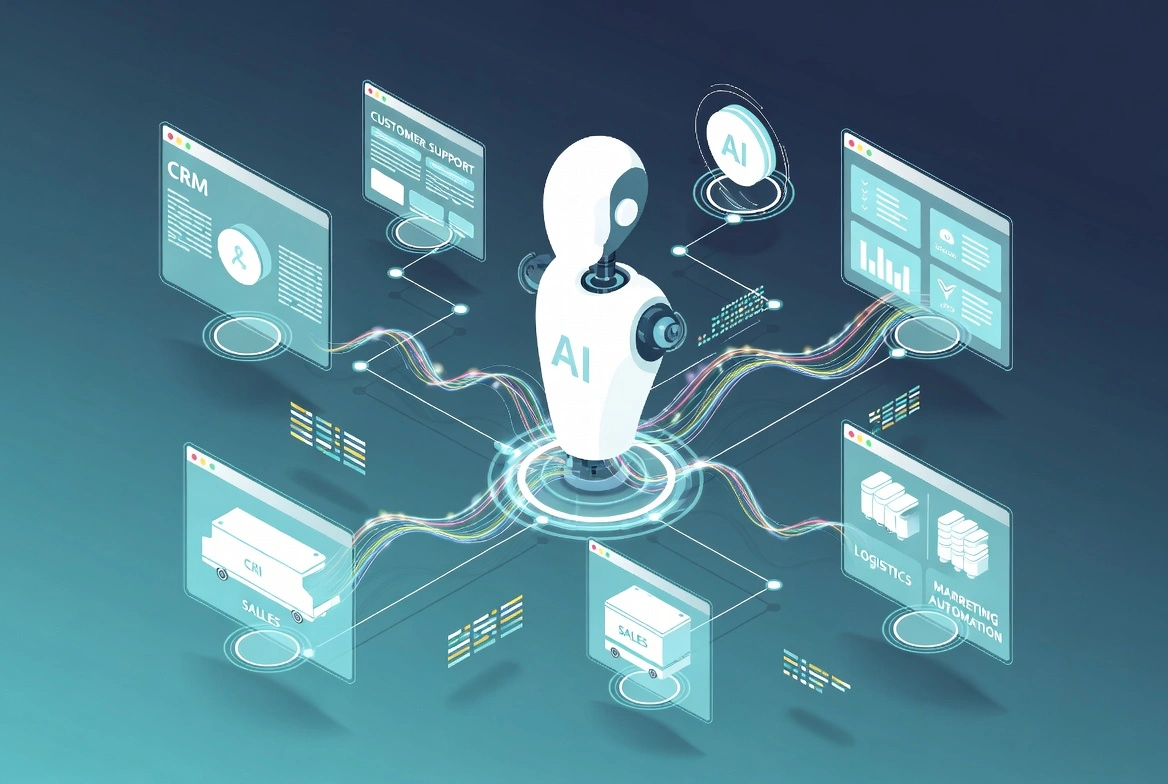
The market is flooded with off-the-shelf chatbot platforms promising quick deployment. But Deloitte's 2025 Emerging Technology Trends study reveals a sobering reality: while 30% of organizations are exploring agentic options and 38% are piloting solutions, only 14% have solutions ready to deploy, and just 11% are actively using these systems in production.
Why the gap? Three fundamental obstacles prevent organizations from realizing AI's full potential:
Legacy System Integration. Traditional enterprise systems weren't designed for AI interactions. Most chatbots still rely on APIs and conventional data pipelines that create bottlenecks and limit autonomous capabilities. Custom development addresses these integration challenges directly.
Industry-Specific Requirements. Generic chatbots don't understand your industry's terminology, compliance standards, or decision flows. Retailers deploying customized conversational AI report a 30% drop in support costs because their bots are trained on sector-specific needs.
Workflow Complexity. Real business processes span multiple systems, require contextual judgment, and demand exception handling. Template-based solutions break at the first deviation from their scripts.
Key Use Cases Driving Business Value in 2026
Sales and Lead Generation
AI-powered sales chatbots have evolved from simple lead capture forms to sophisticated digital sales development representatives. They qualify leads in real-time, identify pain points, recommend solutions, and book meetings directly on your sales team's calendars.
The results speak for themselves: 63% of B2B companies now use chatbots for lead qualification, and businesses report that chatbot-powered funnels convert 2.4x more customers than static web forms. By engaging prospects at peak interest moments, these systems capture opportunities that would otherwise be lost in email scheduling delays.
Customer Service and Support
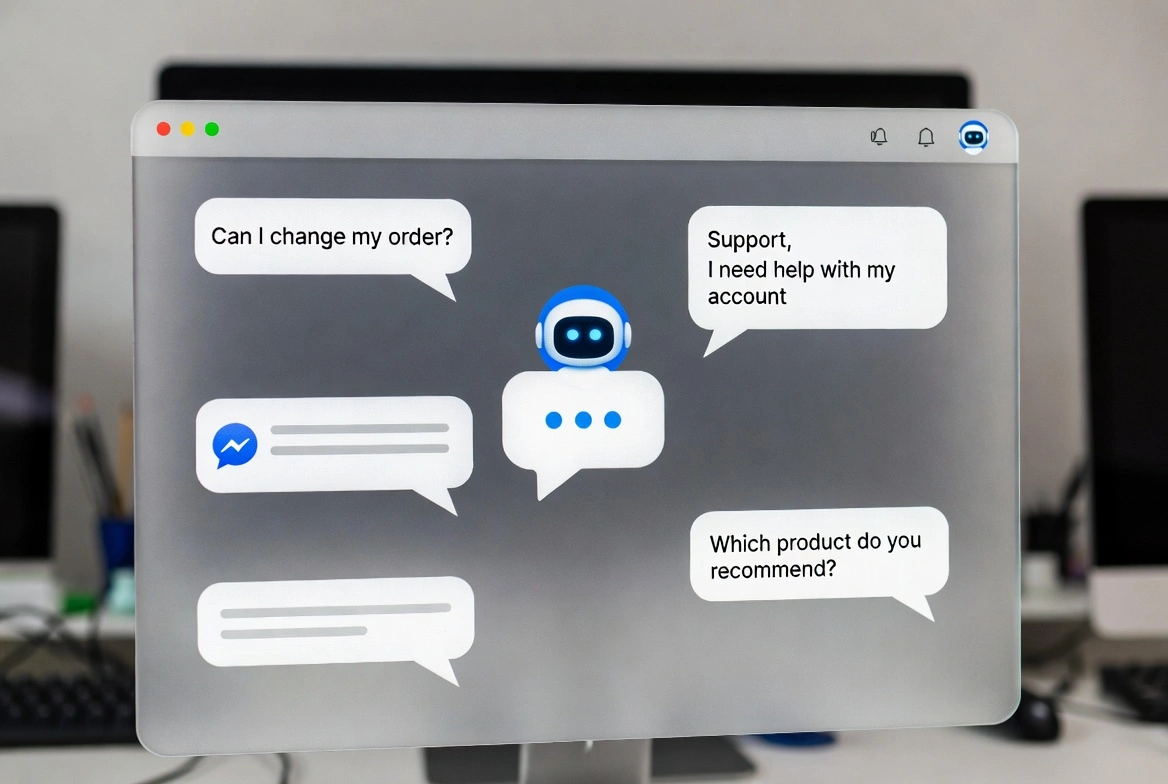
Customer support remains the primary use case for AI chatbots, but capabilities have expanded dramatically. Modern support bots handle FAQs, order tracking, troubleshooting, complaint resolution, and complex issue escalation. 64% of agents equipped with AI chatbots can dedicate their time to solving complex problems, compared to only 50% without AI support.
The cost equation is compelling: the average chatbot interaction costs $0.50, compared to $6.00 for human customer service. Businesses report up to 30% reduction in support costs while simultaneously improving response times and customer satisfaction. 87.2% of people now describe their chatbot conversations as neutral or positive.
Agentic Workflow Automation
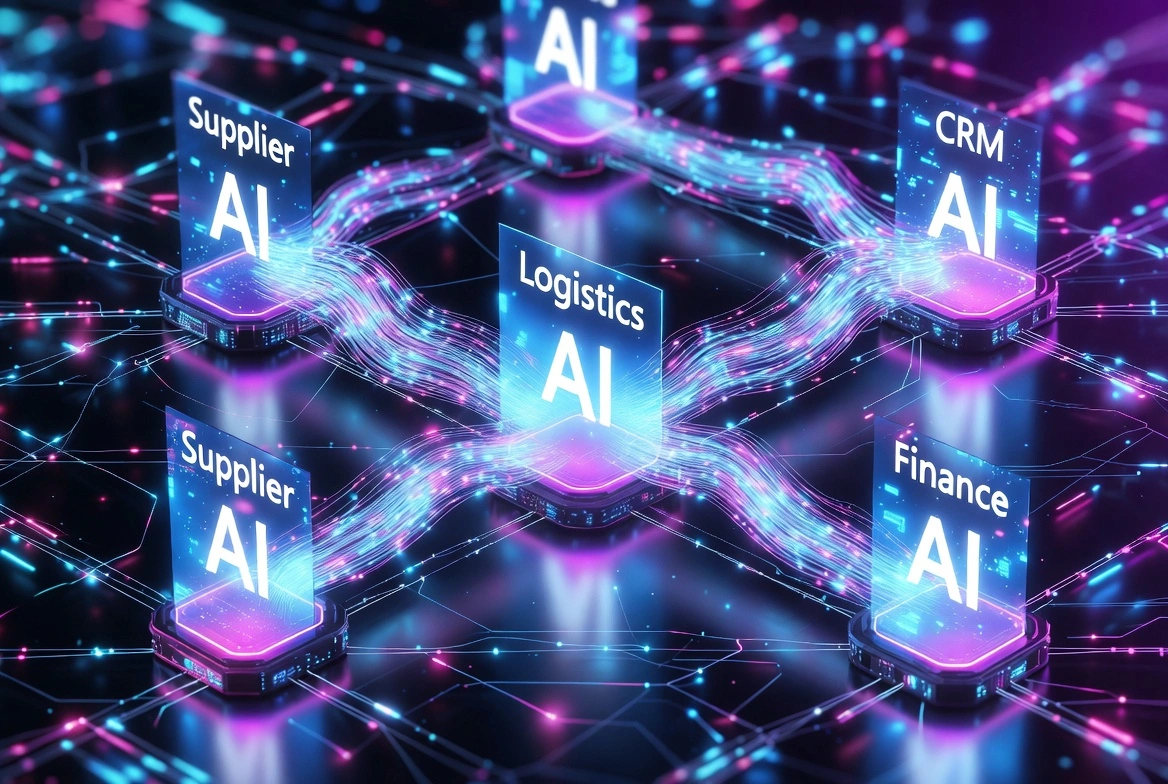
The biggest shift in 2026 is the move from reactive chatbots to proactive, autonomous agents. Instead of waiting for user input, these systems monitor conditions, identify opportunities, and take action.
Examples include agents that detect supply chain issues and automatically adjust orders, systems that identify customer churn signals and trigger retention campaigns, and multi-agent workflows where AI systems negotiate with each other. At Toyota, teams are using agentic tools to gain visibility into vehicle arrival times and resolve supply issues — a process that previously required navigating 50 to 100 mainframe screens.
Industry-Specific Applications
E-commerce and Retail: Retail accounts for 21% of the global chatbot market, with anticipated spending of $72 billion by 2028. Chatbots reduce cart abandonment by up to 29% and enable “zero-click commerce” where purchases happen entirely through conversational interfaces.
Healthcare: The healthcare chatbot market is projected to reach $543.65 million by 2026. AI systems now achieve 79.6% diagnostic accuracy combining text and image analysis.
Financial Services: 43% of financial services companies have adopted AI chatbots, with loan origination accuracy exceeding 95% in automated processing. The insurance sector expects to save $1.3 billion through chatbot-enabled customer support.
Automotive: The automotive AI chatbot market was valued at $60.48 billion in 2024 and is projected to reach $247.1 billion by 2032. Over 90% of car dealerships in North America now feature chat support, with virtual assistants resolving about 90% of incoming questions without human input.
2026 Trends Shaping the Future of Conversational AI
Multi-Agent Systems and Agent2Agent Communication
We're moving from single chatbots to ecosystems of AI agents that collaborate. Salesforce and Google Cloud are building cross-platform AI agents using the Agent2Agent (A2A) protocol — an open, interoperable foundation for enterprise AI. By 2027, 1 in 5 B2B sellers will respond to AI-powered buyer agents with dynamically delivered counteroffers via their own seller-controlled agents.
Concierge-Style Personalization
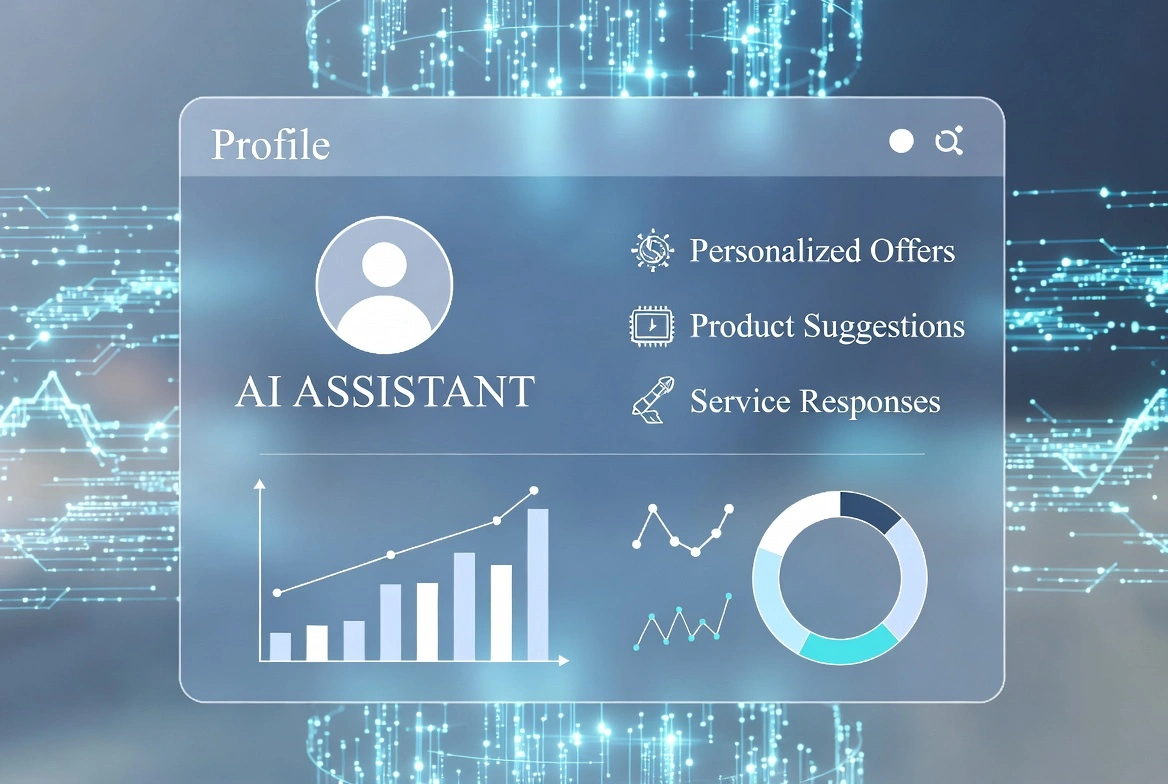
The era of scripted chatbots and reactive customer service is ending. 2026 marks the shift to hyperpersonalized, “concierge-style” service as the new standard. AI systems analyze user behavior, conversation history, and contextual signals to deliver genuinely relevant assistance — anticipating needs rather than just responding to requests.
Low-Code and No-Code AI Platforms
To scale quickly, teams are embracing low-code and no-code AI platforms. This market is expected to grow from $5.55 billion in 2024 to $7.09 billion in 2026 — a 27.7% CAGR. These platforms enable faster deployment while custom development handles complex integrations and enterprise-grade requirements.
AI Governance and Responsible AI
As AI agents gain autonomy, trust becomes a competitive advantage. Over 50% of organizations now involve privacy, legal, IT, and security teams in AI oversight. 2026 could be the year companies overcome the challenge of turning Responsible AI principles into operational processes, with 60% of leaders reporting that RAI boosts ROI and efficiency.
Measuring ROI: What Results to Expect
Businesses implementing AI chatbots report substantial returns when implementation is done correctly. Key benchmarks for 2026:
Cost Reduction: Up to 30% reduction in customer service costs. Average chatbot interaction: $0.50 vs. $6.00 for human service.
Lead Conversion: 2.4x higher conversion rates compared to static forms. 23% improvement in conversion rates reported by organizations using AI chatbots.
Resolution Rates: Well-designed chatbots handle 70% of routine conversations. AI resolves issues 18% faster than traditional support channels.
Time Savings: Employees at Telus save 40 minutes per AI interaction. Suzano achieved 95% reduction in query time using AI agents.
Revenue Impact: 74% of small contact centers report that AI increases revenue. 58% of businesses using chatbots report increased sales.
Common Implementation Mistakes to Avoid
With 40% of agentic AI projects expected to fail, understanding common pitfalls is crucial:
Bolting AI Onto Existing Workflows. Real impact requires reimagining processes with AI at the core. Organizations that simply add chatbots to existing workflows see limited value.
Ignoring Data Readiness. By 2027, companies that don't prioritize high-quality, AI-ready data will struggle to scale AI solutions. Only 39% of companies currently have data assets ready for AI implementation.
Lack of Governance. 42% of organizations are still developing their agentic AI strategy, and 35% have no formal strategy at all. Governance frameworks must evolve from reactive oversight to proactive risk management.
Forgetting the Human Element. Technology delivers only about 20% of an initiative's value. The other 80% comes from redesigning work so agents handle routine tasks while people focus on what truly drives impact.
Frequently Asked Questions
What's the actual difference between a chatbot, an AI assistant, and agentic AI?
Chatbots handle inquiries, qualify leads, and route requests using conversational AI. AI assistants complete defined tasks like scheduling or processing orders. Agentic AI goes further, reasoning through multi-step workflows and making decisions across systems autonomously. Most businesses need a mix, not just the most advanced tier.
How much cheaper is a chatbot interaction than a human-handled one?
A chatbot interaction costs roughly $0.50 compared to $6.00 for human-handled service, and well-designed bots now handle about 70% of routine conversations. That said, cost savings alone shouldn't drive the decision - resolution quality and customer experience matter just as much to long-term ROI.
Why do so many agentic AI projects get cancelled before completion?
Gartner projects 40% of agentic AI projects will be cancelled by the end of 2027, largely due to escalating costs, unclear business value, and inadequate risk controls. Only 14% of companies currently have solutions ready to deploy, which suggests most cancellations trace back to starting before the groundwork was in place.
Is our company's data actually ready for AI chatbot implementation?
Only 39% of companies report their data assets are AI-ready, which is often the real bottleneck behind failed or delayed rollouts. Before evaluating chatbot platforms or vendors, audit whether your customer and operational data is clean, accessible, and structured enough to support the use case you have in mind.
Do off-the-shelf chatbot platforms work as well as custom-built ones?
Off-the-shelf platforms work for simple, standardized use cases, but they struggle with company-specific workflows, legacy system integration, and industry-specific compliance needs. Since legacy integration remains the primary obstacle to AI adoption, a custom-built approach tends to pay off once requirements go beyond basic conversation handling.
How fast is the chatbot and agentic AI market actually growing?
The global chatbot market reached $10-11 billion in 2026 and is projected to hit $61.69 billion by 2032. Enterprise application adoption is accelerating even faster: 40% of enterprise applications are expected to embed AI agents by the end of 2026, up from under 5% in 2025.
What role does governance play in a successful agentic AI rollout?
A missing governance framework is one of the most common reasons agentic AI implementations fail. More than half of organizations now involve privacy, legal, IT, and security teams in AI oversight from the start, and 60% of leaders report that responsible AI practices actually improve ROI rather than slow it down.
Ready to Build AI That Delivers Real Business Value?
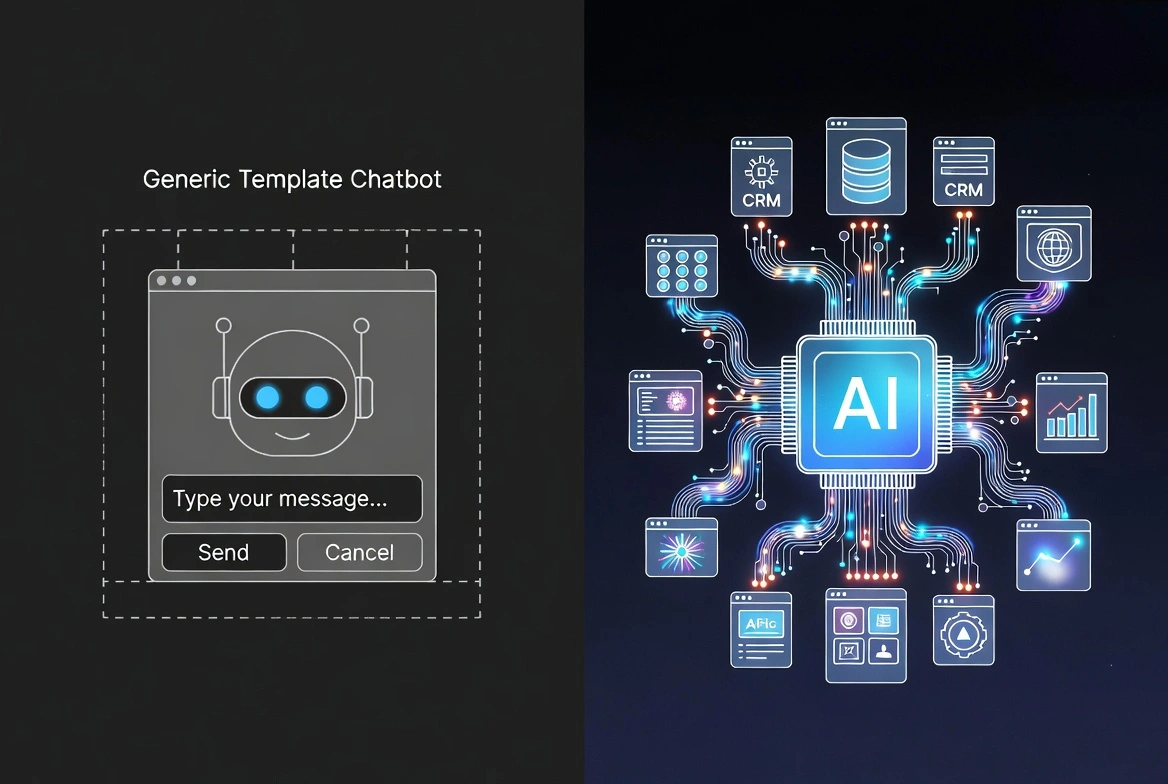
The data is clear: 2026 is the year AI moves from experimentation to operational transformation. But success requires more than deploying a template. It demands custom development that integrates with your systems, understands your industry, and aligns with your specific business workflows.
At Tizbi, we specialize in building custom AI chatbots, virtual assistants, and agentic AI solutions that deliver measurable results. Our development team works closely with your business to understand your unique requirements, integrate with your existing tech stack, and create conversational AI experiences that drive growth.
Whether you need a lead qualification chatbot, customer support automation, internal AI assistant, or multi-agent workflow system, we have the expertise to bring your vision to life.
Contact Tizbi today to discuss how custom AI chatbot and agentic AI development can transform your business operations.
About Tizbi
Tizbi is a software development agency that builds custom solutions for businesses across industries. Our team specializes in AI chatbot development, agentic AI solutions, web and mobile applications, and enterprise software integration. Learn more about our All-In AI practice. We partner with companies to create technology that solves real problems and drives measurable results.