The AI modernization pitch deck practically writes itself: “Transform your decades-old systems with cutting-edge artificial intelligence! Automate everything! Eliminate technical debt overnight!” It’s seductive. It’s also mostly fiction.
After three decades of pulling apart legacy systems and rebuilding them for real businesses, we’ve seen every modernization trend come and go. The promise is always the same: this time will be different. This technology will finally solve the fundamental challenges of legacy modernization.
Here’s what we’ve learned: AI can genuinely accelerate legacy modernization, but only when applied with the same methodical, business-first approach that has always separated successful modernization from expensive disasters.
Table of Contents
- The Reality Check: What AI Can and Cannot Do
- The Three Types of Legacy Modernization (And How AI Fits)
- Reading Between the Lines: Enterprise AI-Washing
- The SMB Reality: Practical AI Implementation
- Our Approach: Business-First AI Integration
- The Economics of AI-Enhanced Modernization
- Making the Decision: When AI Makes Sense
- Beyond the Hype: Sustainable AI Integration
- Frequently Asked Questions
- Let’s Talk About Your Modernization Project
The Reality Check: What AI Can and Cannot Do
The enterprise consulting world wants you to believe AI has fundamentally changed legacy modernization. Code analysis that used to take months now happens in days. Documentation that never existed can be generated automatically. Business rules buried in COBOL can be extracted and translated to modern languages.
Some of this is true. Some of it is expensive wishful thinking.
Where AI Actually Delivers
AI excels at pattern recognition in legacy codebases. We’ve used machine learning tools to map data flows through systems that hadn’t been touched in fifteen years. Natural language processing can extract business logic from comments, variable names, and even old documentation. Code generation tools can create modern API endpoints that mirror legacy system behavior.
These capabilities are real and valuable. They can compress discovery phases from quarters to months and reduce the manual archaeology that traditionally dominates modernization projects.
Where AI Falls Short
AI cannot make business decisions for you. It cannot determine which legacy processes should be preserved versus which should be redesigned. It cannot navigate the political complexity of systems that span multiple departments, each with their own definition of how things “should” work.
Most critically, AI cannot solve the fundamental challenge of legacy modernization: understanding why the system works the way it does, and whether that still makes business sense.
The Three Types of Legacy Modernization (And How AI Fits)
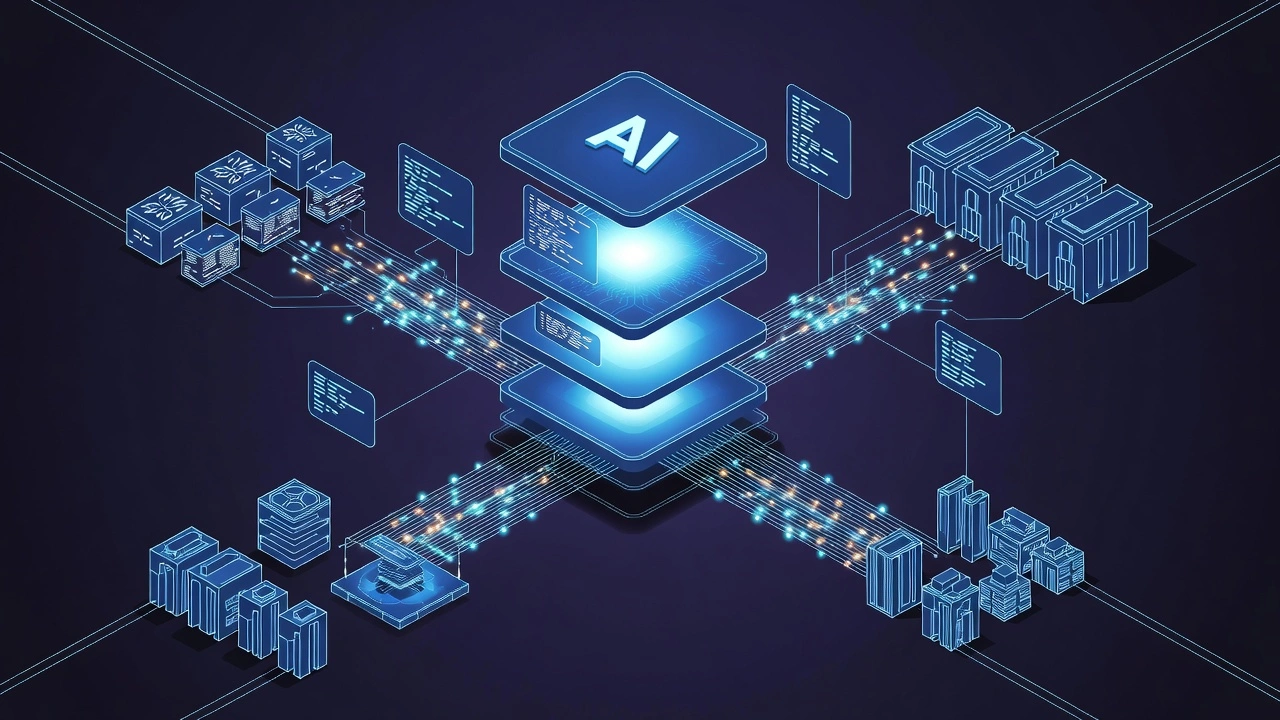
Lift-and-Shift Plus AI
This is the most common approach being sold today: migrate your existing system to modern infrastructure and add AI-powered features on top. The appeal is obvious—minimal business process disruption, faster time to market, buzzword compliance for board presentations.
The reality is more complex. You end up with a beautifully hosted version of the same fundamental limitations that drove you to modernize in the first place, now with additional AI complexity layered on top.
AI can make lift-and-shift more palatable by adding modern interfaces and some degree of intelligent automation. But it’s still fundamentally putting new wine in old wineskins.
Reimagination with AI-First Architecture
At the other extreme: throw everything out and rebuild around AI capabilities. Design your business processes to leverage machine learning, natural language processing, and predictive analytics from the ground up.
This approach can create genuinely transformative systems. It can also create genuinely expensive failures when the AI-first design doesn’t align with how your business actually operates day-to-day.
The organizations that succeed with AI-first modernization typically have two characteristics: significant appetite for business process change and the resources to iterate through multiple design cycles.
Targeted AI Enhancement
The middle path: modernize your core system architecture using proven approaches, then identify specific areas where AI can add meaningful value.
This might mean AI-powered document processing for your invoice handling, predictive analytics for inventory management, or natural language interfaces for customer service, all built on top of a fundamentally solid, modern system architecture.
This approach requires more discipline. You can’t lead with AI in your board presentations. But it consistently produces systems that deliver measurable business value rather than impressive demonstrations.
Reading Between the Lines: Enterprise AI-Washing
The legacy modernization space is experiencing an epidemic of AI-washing, the practice of rebranding traditional consulting services with artificial intelligence terminology to justify premium pricing.
Warning Signs of AI-Washing
The vendor leads with AI capabilities rather than business outcomes. They emphasize their “proprietary AI frameworks” without explaining what specific problems these frameworks solve. They provide impressive statistics about code analysis speed or documentation generation volume without connecting these metrics to actual business value.
Most tellingly, they struggle to explain their approach when AI tools fail or provide inaccurate results. Genuine AI-enhanced modernization always includes fallback processes and human validation steps.
Questions That Expose AI-Washing
“What happens when your AI misinterprets our business logic?” Legitimate AI-enhanced modernization includes robust validation and correction processes. AI-washing relies on the assumption that the technology will simply work.
“Can you show us examples of where you chose NOT to use AI in similar projects?” Real practitioners understand that AI is a tool, not a universal solution. They can articulate specific scenarios where traditional approaches are more appropriate.
“How do you handle data privacy and model training with our proprietary business logic?” This question separates vendors who understand enterprise AI implementation from those who are retrofitting consumer AI tools for business use.
 Trusted Software & AI Partner
28+ Years of Experience
400+ Projects Delivered
99% Client Satisfaction
Trusted By



The SMB Reality: Practical AI Implementation
Small and medium businesses face unique challenges in AI-driven modernization. Unlike enterprises, they cannot afford to experiment with cutting-edge approaches that might or might not deliver results.
The Resource Constraint
SMBs typically cannot dedicate full-time teams to AI model training and maintenance. Any AI implementation must be designed for minimal ongoing overhead while delivering immediate, measurable value.
This constraint is actually beneficial. It forces focus on AI applications with clear ROI rather than speculative investment in impressive-sounding capabilities.
The Integration Challenge
SMBs often rely on systems that were never designed to work together. Their legacy modernization needs are less about outdated technology and more about creating coherent data flows between disparate systems.
AI can excel in this environment by providing intelligent translation layers between systems, automated data cleansing, and exception handling for edge cases that would otherwise require manual intervention.
The Skills Gap
SMBs rarely have in-house AI expertise. Successful AI-enhanced modernization for smaller businesses requires solutions that can be maintained by existing IT staff, or by a dedicated development team that integrates with them, rather than specialized data science teams.
This means favoring established AI services and frameworks over custom model development, and prioritizing explainable AI approaches over black-box solutions.
Our Approach: Business-First AI Integration
When we evaluate AI opportunities in legacy modernization, we start with the same question we ask for every technology decision: what specific business problem does this solve?
Discovery Before Deployment
AI tools can accelerate legacy system analysis, but they cannot replace the fundamental work of understanding how your business actually operates versus how it was designed to operate.
We use AI to process legacy code and documentation more efficiently, but we validate every insight through conversations with the people who actually use these systems day-to-day. The goal is not to replicate legacy business logic in modern technology, but to preserve what works while eliminating what doesn’t.
Incremental Implementation
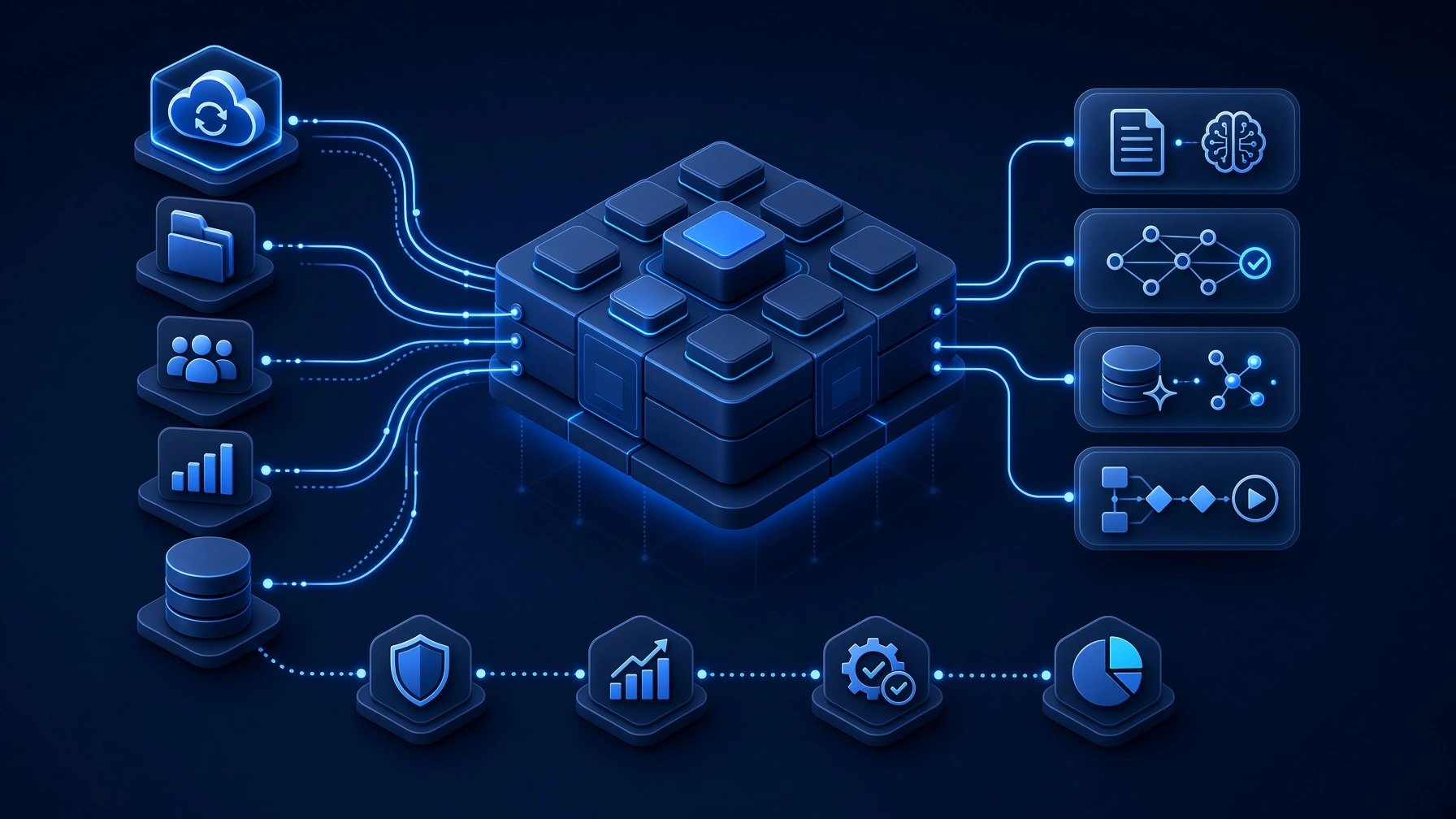
Rather than attempting comprehensive AI transformation, we identify specific workflow bottlenecks where AI can provide immediate value. This might be automated data entry, intelligent routing of customer requests, or predictive maintenance scheduling.
Each AI component is implemented as a discrete service that enhances the modernized system without creating dependencies that could complicate future changes.
Transparent Limitations
We discuss AI limitations upfront. Machine learning models require ongoing training data. Natural language processing can misinterpret domain-specific terminology. Predictive analytics are only as good as the historical data they analyze.
Understanding these limitations helps set realistic expectations and design systems that degrade gracefully when AI components encounter edge cases.
The Economics of AI-Enhanced Modernization
The promise of AI is reduced development costs and faster implementation timelines. The reality is more nuanced.
Where AI Reduces Costs
Code analysis and documentation generation can compress discovery phases significantly. Automated testing can identify edge cases that would otherwise surface during user acceptance testing. Intelligent data migration can reduce the manual effort required to clean and validate legacy data.
These savings are real and substantial, particularly for large, complex systems with minimal existing documentation.
Where AI Increases Costs
AI implementation requires additional infrastructure, ongoing model maintenance, and specialized security considerations. Teams need training on AI tool usage and limitations. Integration testing becomes more complex when AI components introduce probabilistic rather than deterministic behavior.
The key is ensuring that AI-related costs are justified by specific business value rather than generic “future-proofing” arguments.
ROI Timeline
AI-enhanced modernization typically shows different ROI patterns than traditional approaches. Initial development may be faster, but ongoing operational costs can be higher. Long-term benefits often come from capabilities that weren’t possible with legacy systems rather than simple cost savings.
Successful projects establish clear metrics for measuring AI value contribution separate from general modernization benefits.
Making the Decision: When AI Makes Sense
Not every legacy modernization project benefits from AI integration. The decision should be based on specific characteristics of your business and technical requirements.
Strong AI Candidates
Systems that process large volumes of unstructured data. Workflows that require complex decision-making based on multiple variables. Customer-facing applications that could benefit from personalization or intelligent automation.
Businesses with sufficient data history to train meaningful models and the organizational capacity to iterate on AI implementations.
Weak AI Candidates
Simple transactional systems with well-defined business rules. Organizations undergoing significant business process changes that would invalidate AI training data. Environments with strict regulatory requirements that are incompatible with AI decision-making processes.
Projects with extremely tight timelines that cannot accommodate AI implementation uncertainty.
Beyond the Hype: Sustainable AI Integration
The future of legacy modernization will certainly include AI, but not in the revolutionary way that current marketing suggests. Instead, AI will become another tool in the modernization toolkit, powerful when applied appropriately, counterproductive when forced into inappropriate contexts.
Focus on Fundamentals
Successful AI integration requires the same disciplined approach as any other technology decision: clear business requirements, realistic timeline expectations, and thorough testing before deployment.
The organizations that benefit most from AI-enhanced modernization are those that treat it as an enhancement to solid engineering practices rather than a replacement for them.
Build for Change
AI technology is evolving rapidly. System architectures should be designed to accommodate changing AI capabilities without requiring fundamental redesign.
This means favoring modular approaches where AI components can be upgraded or replaced independently, and maintaining fallback processes that can operate without AI assistance.
The goal is not to build an AI system, but to build a modern system that can leverage AI effectively as the technology matures.
Frequently Asked Questions
Can AI really speed up legacy system modernization?
Yes, in specific ways. AI is genuinely effective at pattern recognition in legacy codebases, mapping data flows, and extracting business logic from old documentation and comments. It can compress discovery phases from quarters to months. What it can’t do is make the business decisions about which processes to preserve or redesign.
What’s the difference between lift-and-shift, AI-first, and targeted AI enhancement?
Lift-and-shift migrates your existing system to modern infrastructure with AI features layered on top, but often carries the same underlying limitations forward. AI-first rebuilds everything around AI capabilities from scratch, which can be transformative but requires significant appetite for business process change. Targeted AI enhancement modernizes the core architecture first, then adds AI only where it delivers clear, measurable value. This is usually the most disciplined and reliable path.
How do I know if a vendor is “AI-washing” their modernization pitch?
Watch for vendors who lead with AI capabilities instead of business outcomes, who can’t explain what problem their “proprietary AI framework” actually solves, or who struggle to answer what happens when their AI misinterprets your business logic. A legitimate vendor can also tell you about projects where they deliberately chose not to use AI.
Is AI-driven modernization realistic for a small or mid-sized business?
Yes, but the approach needs to look different than an enterprise rollout. SMBs typically can’t dedicate full-time teams to AI maintenance, so the right implementation favors established, explainable AI tools that existing IT staff can maintain, rather than custom model development that requires a dedicated data science team.
When does AI integration NOT make sense for a modernization project?
AI tends to be a poor fit for simple transactional systems with well-defined business rules, organizations mid-way through major process changes (which invalidates training data), environments with strict regulatory constraints, and projects with tight timelines that can’t absorb AI implementation uncertainty.
Does AI integration reduce or increase the overall cost of modernization?
Both, depending on where you look. AI can meaningfully cut costs in discovery, documentation, and data migration. But it also introduces new costs: infrastructure, ongoing model maintenance, team training, and more complex integration testing. The key is making sure AI-related spend is tied to specific, measurable business value rather than general “future-proofing.”
How does Tizbi approach AI in legacy modernization projects?
We start with the business problem, not the technology. We validate every AI-generated insight against conversations with the people who actually use the system day to day. AI components are implemented incrementally, as discrete services layered onto a solid modernized architecture, so the system degrades gracefully if an AI component hits an edge case rather than depending on it to function at all.
Let’s Talk About Your Modernization Project
Legacy modernization has always been about bridging the gap between where your business is and where it needs to go. AI can accelerate that journey, but it cannot replace the fundamental work of understanding your business requirements and designing systems that serve them effectively.
We’ve helped dozens of organizations navigate modernization decisions over the past three decades. The conversation always starts the same way: what business problem are you trying to solve? Everything else, including AI integration, flows from that answer.
If you’re evaluating legacy modernization options and want to separate AI reality from AI marketing, let’s have that conversation. No vendor pitches, no proprietary frameworks to sell, just a practical discussion about what makes sense for your specific situation.