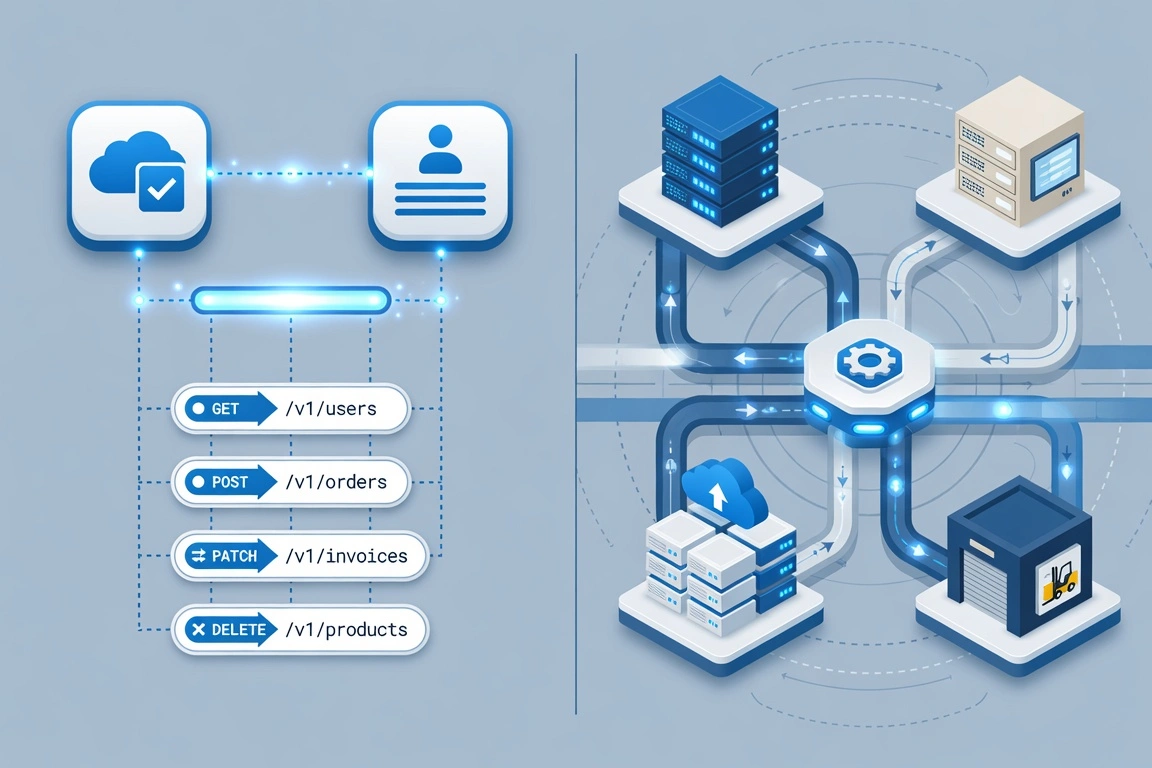
You're staring at a whiteboard covered in boxes and arrows. Your team is debating REST versus GraphQL. Middleware or platform. Serverless or containerized. Meanwhile, your CEO keeps asking the one question nobody in the room wants to answer: when will the customer data actually flow between systems so the sales team can stop copying spreadsheets by hand?
That gap — between what engineers find interesting and what the business actually needs — is where most integrations quietly die.
Tizbi has run over 400 projects as an api integration company across 28 years. The pattern is consistent: teams that start with the business problem build integrations that last. Teams that start with the technology build integrations that impress in demos and disappoint in production.
Table of Contents
- The Technology-First Trap
- The Business-First Alternative
- Where Technology-First Goes Wrong
- Implementing a Business-First API Strategy
- The Long-Term Partnership Advantage
- Making the Strategic Choice
- Conclusion: Solving Business Problems Before Technical Ones
The Technology-First Trap
When the Tail Wags the Dog
Here's how it usually starts. Your development team discovers a new API platform. The demos are slick. The documentation is clean. The pricing looks reasonable. Three weeks in — before anyone has defined the actual business problem — you're $50,000 deep in platform licenses.
Tizbi has rescued projects that started exactly this way.
The code was clean. The architecture was sound. The integration was solving the wrong problem.
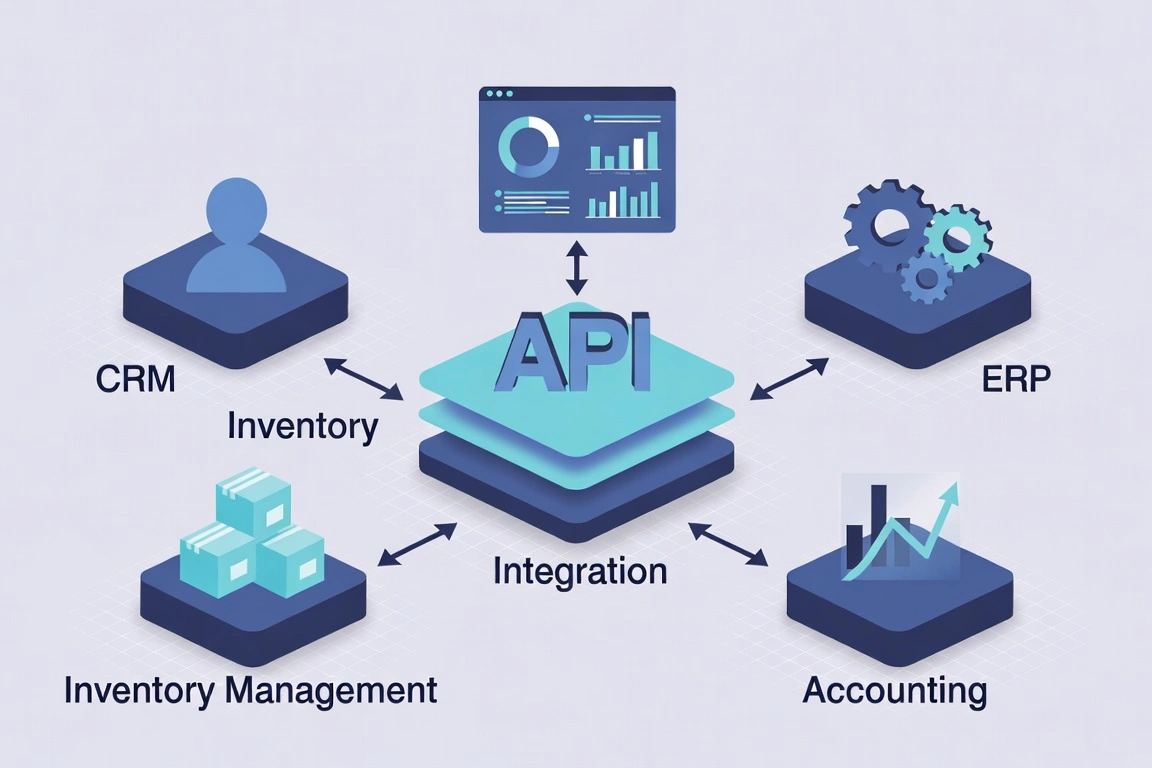
One manufacturing client called us after their previous vendor built a "modern microservices architecture" connecting inventory to accounting. Technically beautiful. Business-wise, it created more work than it eliminated. The real-time sync forced the accounting team to verify every single inventory movement — instead of doing their normal batch reconciliation at month-end.
The integration worked perfectly. It was also perfectly wrong.
The Platform Seduction
API platform vendors are very good at selling the dream. Connect everything to everything else, they say. Drag-and-drop simplicity. Data flowing like water.
Reality is messier.
Every system has quirks. Data formatting preferences. Business logic that doesn't translate cleanly. Your CRM doesn't talk to your inventory system the way it talks to your email platform. One integration might need real-time sync. Another works better with nightly batch updates.
But the platform promised universal connectivity, so teams force every integration into the same mold. They build complex workarounds to make their business processes fit the platform's assumptions — instead of finding an api integration solution that fits their business.

The Business-First Alternative
Starting with the Human Story
Business-first API integration starts with one simple question: what problem are we actually solving for real humans?
Not systems. Not data flows. Not architectural elegance. Humans.
Maybe your customer service team spends two hours every morning copying order data from your e-commerce platform into your fulfillment system. Maybe your sales team can't see which prospects engaged with marketing emails. Maybe accounting is reconciling the same transaction across four different systems.
Human problems that happen to have technical solutions. Not technical problems searching for business justification.
The Discovery Discipline
We start every engagement as an integration consulting services provider with what we call "day-in-the-life" discovery. We sit with the people who will be affected. We watch them work. We time their manual processes. We find where the real friction lives.
This almost always changes the project scope.
A retail client came to us wanting to connect their point-of-sale system to inventory management for "real-time inventory visibility." Reasonable enough. But when we shadowed their store managers, the actual problem looked different. They weren't running out of products because they couldn't see current inventory levels. They were running out because their reorder points were wrong.
So we built a different integration — one that connected the POS system to supplier delivery schedules and seasonal sales patterns. Instead of real-time inventory visibility, they got predictive restocking recommendations. Same technical complexity — entirely different business outcome.
Honestly: this is the part of our process we're most proud of. Not the code. The questions we ask before writing it.

Business Outcomes as Success Metrics
Technology-first teams measure success in technical terms. Response times. Throughput. Uptime. Error rates.
These metrics matter. They're not business metrics.
Business-first teams measure differently: How much time did we save? How many errors disappeared? How much revenue did we enable? How much frustration did we remove?
One healthcare client measured their custom api integration success by minutes saved per patient check-in. Their old process required front desk staff to enter patient information into three separate systems. After the integration: one system, automatic propagation. The technical metrics were fine — sub-100ms response times, 99.9% uptime. But the business metric told the real story: 4.2 minutes saved per patient. Eight extra appointments per day, per location.
That's the number that mattered.
Where Technology-First Goes Wrong
The Overengineering Spiral
Without clear business constraints, technical teams optimize for the wrong things. They build for theoretical scale instead of actual usage. They architect for perfect data consistency when eventual consistency would work fine. They implement real-time sync for processes that happen once a day.
We inherited a project where the previous team had built an event-driven microservices architecture to sync customer data between a CRM and an email marketing platform. The system could handle 100,000 events per second.
The client had 2,000 customers. Contact information was updated maybe twice a week.
That over-engineered solution cost $3,000 per month to run and required a dedicated DevOps engineer. A simple nightly batch sync would have cost $50 per month. Maintenance-free.

The Integration Sprawl Problem
Technology-first thinking leads to connecting systems because you can, not because you should. Every new connection adds complexity. Every data flow creates a potential failure point. Every integration needs ongoing maintenance.
Business-first system integration services apply a different discipline: each integration must justify its existence in business terms. That constraint alone prevents a lot of "nice-to-have" connections that add cost without adding value.
The Data Quality Blind Spot
Here's a misconception we encounter constantly: teams believe connecting systems will fix their data quality problems.
It won't.
Integration doesn't create data quality — it amplifies existing data quality. If your source system has duplicate customer records, real-time sync just means you'll have duplicate customer records everywhere in real-time. The problem moves faster. It doesn't go away.
Business-first integration treats data quality as a prerequisite, not an afterthought. We help clients clean their data before connecting their systems. The integration becomes an opportunity to implement data governance — not just data movement.
Implementing a Business-First API Strategy
The Five-Question Framework
Before writing a single line of code, we work through five questions with every client:
- Whose job becomes easier? Name specific people whose daily work will improve.
- What manual work disappears? Identify concrete tasks that will be eliminated or automated.
- How do we measure success? Define business metrics — not just technical metrics.
- What happens if this breaks? Understand business continuity requirements before you build.
- How does this scale with growth? Align architecture with your business trajectory, not with what looks impressive on paper.
These questions force business thinking before technical implementation. They make architecture decisions based on business value rather than technical elegance. And they surface the gaps that would otherwise cost you months.
Phased Implementation Strategy
The best api integration provider hand you a finished system on day 90. They deliver working value in week three and build from there.
Instead of constructing the full architecture upfront, we identify the highest-value connections and start there. Early phases provide immediate business value while validating assumptions. Problems surface when they're still cheap to fix. Business requirements evolve as users experience early integrations — and they always do.
A logistics client wanted to integrate their transportation management system with order processing, warehouse management, and financial reporting. We started with order processing — the connection that would eliminate the most manual work.
That first integration revealed inconsistent order data structures that would have broken the other two integrations. We fixed the data quality problem in phase one. The remaining integrations followed in subsequent phases. A potential nine-month disaster became three consecutive three-month wins.
Building for Business Continuity
Business-first design includes failure planning from the start. What happens when the API goes down? When data sync fails? When an external system changes its data format without warning?
These aren't just technical questions. They're business continuity questions.
The architecture needs to degrade gracefully so operations continue even when connections fail. That means temporary data stores, retry logic, manual fallback processes. Less elegant than assuming perfect connectivity. More realistic for actual business operations.
The Long-Term Partnership Advantage
Beyond Implementation
Technology-first vendors disappear after go-live. Their job was to connect the systems. Once the APIs are calling each other, they're done.
We're still working with clients we first integrated five years ago. Not because their systems keep breaking. Because their businesses keep growing. The integration that worked for 50 employees needs rethinking at 200. The seasonal patterns in one market don't apply when expansion starts.
Integration is an ongoing relationship. Not a one-time project.
Ownership and Control
Working with a system integration company that prioritizes your ownership means you keep control of your data, your business logic, and your architecture. No lock-in to proprietary platforms. No dependency on a vendor's roadmap or pricing decisions.
That flexibility matters most when things change. And things always change.

Making the Strategic Choice
The choice between business-first and technology-first comes down to one question: are you trying to solve a business problem, or implement a technical solution?
Both approaches produce working integrations. Only one consistently produces integrations that drive business value over the long term.
Business-first takes more upfront discovery. It demands genuine partnership between technical and business teams. It requires asking uncomfortable questions before anyone writes a line of code.
The result: infrastructure that actually serves your business objectives, scales with your growth, and adapts when requirements change. Technology that becomes invisible — enabling outcomes rather than requiring ongoing attention.
Ready to Solve the Right Problem?
If you're evaluating api integration services for your business, Tizbi is happy to have a real conversation — not a sales pitch. A genuine discussion about whether integration makes sense for you and what approach would actually serve your business.
Sometimes the honest answer is "not yet." Sometimes it's "not this way." We'll say that directly.
Conclusion: Solving Business Problems Before Technical Ones
Twenty-eight years of integration work has taught us one thing above everything else: the best technical solutions start with clear business problems. Get the problem right first. The technology follows.
Talk to Tizbi about your integration → Contact us.