The AI landscape just shifted again. OpenAI's GPT-5.5 landed six weeks after GPT-5.4 — the fastest major release cycle we've seen in enterprise AI. While tech publications dissect benchmarks and developers celebrate new APIs, you're asking the real question: “What does this actually mean for my business?”
After 28 years building custom software and helping 400+ companies navigate technology transitions, Tizbi has learned something critical: the businesses that win aren't the ones with the fanciest AI tools. They're the ones that understand what problems they're solving first, then choose the right technology to solve them.
GPT-5.5 represents a fundamental shift from AI as a productivity helper to AI as a strategic business asset. But like any powerful tool, it can either accelerate your growth or create expensive complexity if implemented poorly.
Let's cut through the hype and focus on what matters for your business decisions in 2026.

Table of Contents
- GPT-5.5 Reality Check: Beyond the Marketing Headlines
- Why SMBs Have an AI Advantage
- The SMB AI Implementation Framework
- Data Custody: Your Competitive Moat
- The Strategic GPT-5.5 Implementation Playbook
- Risk Management and Common Pitfalls
- Why 2026 Is the Strategic AI Window
- Industry-Specific AI Adoption Trends
- Build vs Buy: Choosing the Right AI Approach
- The Hybrid AI Strategy
- Preparing Your Team for AI Collaboration
- Practical Next Steps for CEOs
- AI as a Strategic Business Asset
The GPT-5.5 Reality Check: Beyond the Marketing Headlines
OpenAI's latest release includes three capabilities that directly impact how businesses operate:
Enhanced reasoning that actually works in business contexts. Previous models could sound impressive but often failed when handling complex, multi-step business logic. GPT-5.5 can maintain context across longer conversations and complex workflows — the difference between an AI that can draft emails and one that can manage entire customer service interactions from inquiry to resolution.
Dramatically improved “hallucination resistance.” Bank of New York's testing showed GPT-5.5 generating false information 73% less frequently than GPT-4. For business applications, this isn't a nice-to-have — it's existential. The difference between an AI assistant that occasionally makes mistakes and one that consistently provides reliable information is the difference between a helpful tool and a liability.
Genuine multi-modal intelligence. Not just “can process images and text” but actually understanding relationships between different types of data. Think analyzing sales presentations while simultaneously reviewing financial spreadsheets and customer feedback — then providing actionable insights that consider all three data sources.
Here's what we're seeing in real implementations: companies that rushed to deploy earlier AI versions are now dealing with inconsistent outputs, customer service problems, and teams that don't trust their AI tools. Meanwhile, businesses taking a strategic approach are building competitive advantages that compound over time.
The lesson? This isn't about keeping up with AI trends. It's about building sustainable competitive advantages using tools that actually work.

The Small Business Advantage: Why SMBs Can Move Faster Than Giants
Large enterprises get the headlines, but small and medium businesses have a secret weapon in the AI transformation: speed.
While Fortune 500 companies navigate committees, compliance reviews, and integration challenges across dozens of legacy systems, you can implement, test, and refine AI solutions in weeks instead of quarters.
We're seeing this play out with our clients. A regional logistics company deployed a GPT-5.5-powered customer service system in three weeks that handles 80% of routine inquiries automatically. Meanwhile, their Fortune 500 competitors are still in “exploration phases” that won't complete until 2027.
But speed only helps if you're moving in the right direction.
The SMB AI Implementation Framework
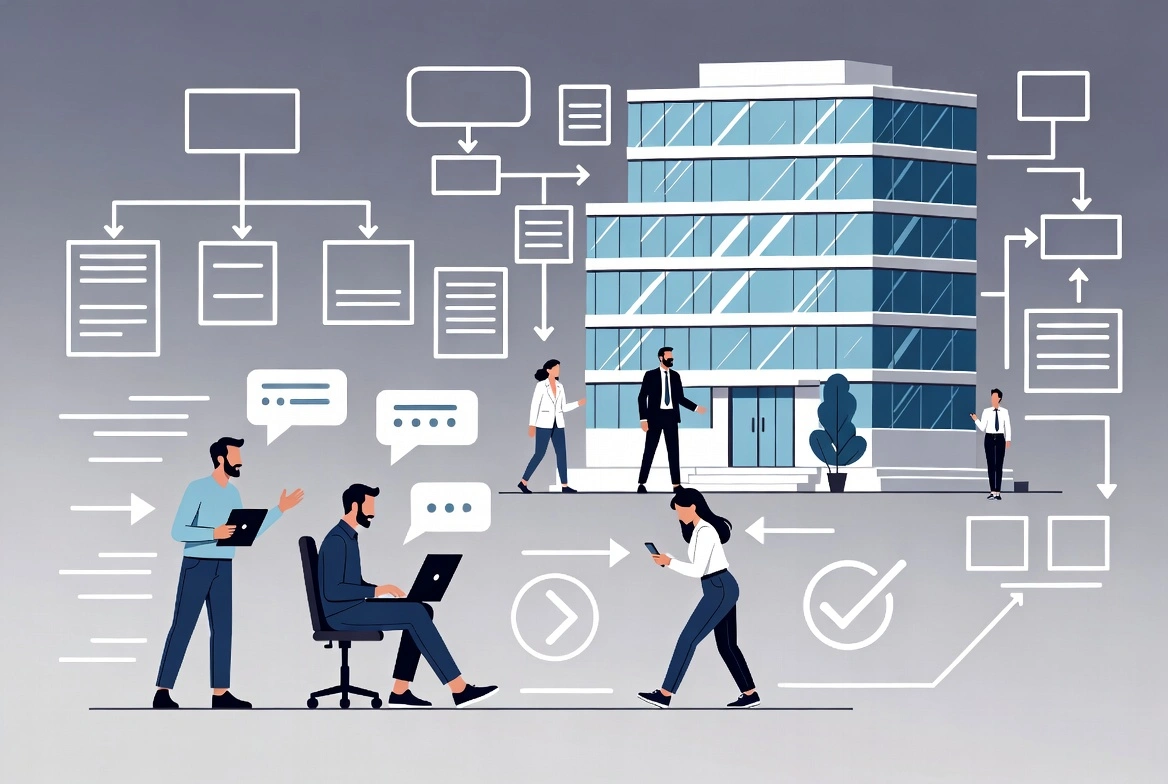
Start with your biggest operational pain point — not your most exciting AI opportunity. The companies seeing real ROI are solving expensive, time-consuming problems first:
- Customer service teams spending 60% of their time on routine questions
- Sales processes that lose leads between initial contact and follow-up
- Inventory management that's always reactive instead of predictive
- Financial reporting that takes weeks when it should take hours
GPT-5.5's enhanced reasoning capabilities mean you can automate complex workflows that previously required human judgment. But the key is choosing workflows where AI mistakes are recoverable and human oversight is built into the process.
Data Custody: Your Competitive Moat in the AI Age
Here's something most AI consultants won't tell you: your data is more valuable than the AI model processing it.
GPT-5.5 is impressive, but it's the same model your competitors can access. Your competitive advantage comes from training AI systems on your unique business data, customer interactions, and operational knowledge.
This is why we always recommend custom implementations over off-the-shelf AI solutions. When you control your data and your AI training process, you're building competitive advantages that compound over time. When you rely on generic AI platforms, you're renting capabilities that your competitors can duplicate tomorrow.
Your data is your gold. Your AI training is your mining operation. Don't let someone else control the mine.

The Strategic Implementation Playbook: Your 2026 Roadmap
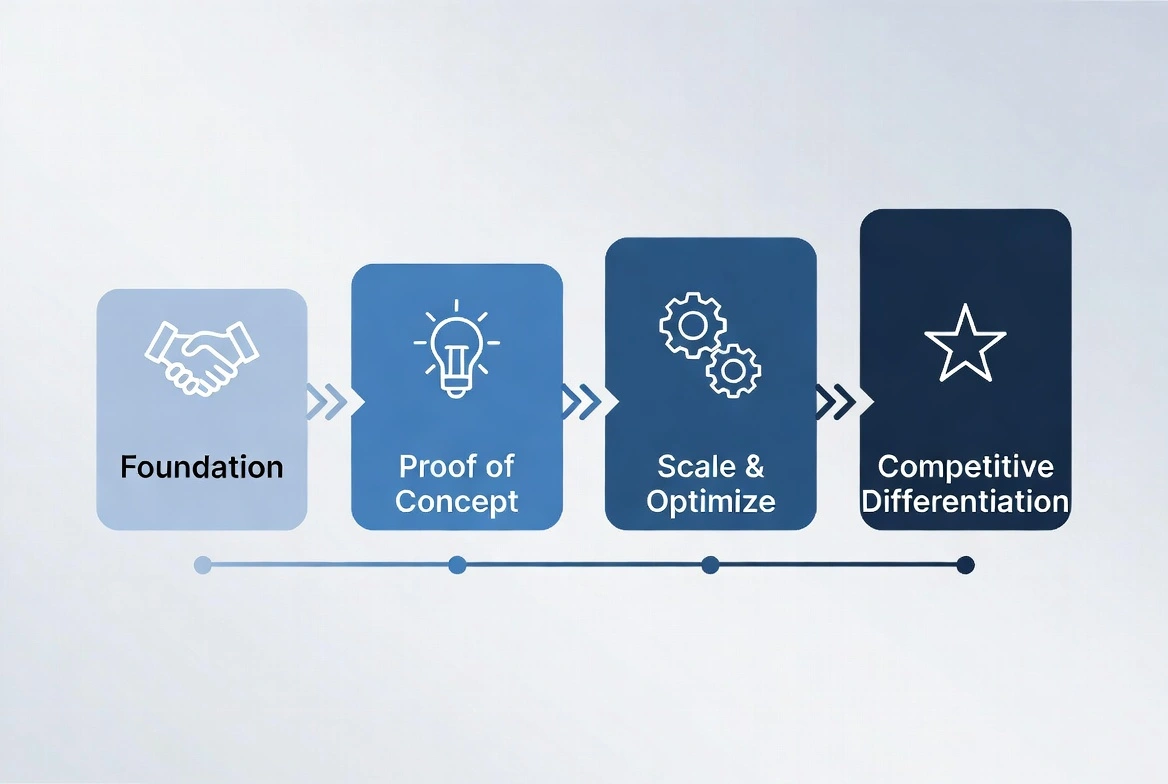
Phase 1: Foundation (Months 1-2)
Before you touch GPT-5.5, audit your data infrastructure. AI is only as good as the data it processes. Clean, structured, accessible data is your prerequisite for everything else.
Most businesses discover they have data scattered across multiple systems with no unified access layer. Solving this creates immediate operational benefits — even before AI enters the picture.
Phase 2: Proof of Concept (Month 3)
Choose one specific workflow where AI can create measurable impact. Start small, but start with something that matters to your bottom line.
Build the system to operate with human oversight initially. Let your team build trust with the AI outputs before increasing automation levels.
Phase 3: Scale and Optimize (Months 4-6)
Once your proof of concept proves value, expand to related workflows. The key insight: AI implementations that build on each other create compound benefits. Your customer service AI can inform your sales AI, which can inform your inventory AI.
Phase 4: Competitive Differentiation (Months 6+)
This is where custom AI development becomes a strategic advantage. You're not just using AI tools — you're building AI-powered business processes that competitors can't easily replicate.
Risk Management: What Could Go Wrong (And How to Prevent It)
Twenty-eight years of custom software development teaches you that every technology implementation has potential failure points. AI implementations add new risks that many businesses haven't considered.
Data Security and Privacy
GPT-5.5 processing your business data means OpenAI's systems potentially have access to customer information, financial data, and operational details. For many businesses, this creates compliance and competitive risks that outweigh the benefits.
Custom AI implementations with on-premise or private cloud deployment solve this problem but require more sophisticated technical infrastructure.
AI Dependency Without Understanding
The biggest risk we see: businesses that deploy AI systems without understanding how they work. When the AI makes mistakes (and it will), teams can't troubleshoot, adjust, or improve the system.
Successful AI implementations include training programs that help your team understand what the AI is doing and how to work with it effectively.
Integration Complexity
GPT-5.5 doesn't automatically connect with your existing business systems. Most AI projects fail during integration — connecting the AI capabilities with your CRM, accounting system, inventory management, and other critical business tools.
Planning integration requirements upfront prevents expensive surprises later.
The Realistic Timeline
Marketing materials suggest AI transformation happens quickly. Reality is more complex.
Expect 3-6 months for meaningful AI implementation that creates measurable business impact. Expect 6-12 months to fully integrate AI into your operational workflows. Expect 12+ months to build AI-powered competitive advantages that change your market position.
Companies that rush this process often create expensive problems. Companies that approach it systematically build sustainable advantages.
Your Competitive Window: Why 2026 Is the Strategic Moment
Here's what we're seeing across our client base: the businesses implementing AI thoughtfully in 2026 are building 2-3 year competitive advantages. Their competitors will eventually deploy similar AI capabilities, but by then, these early adopters will have refined processes, trained teams, and operational advantages that are difficult to replicate quickly.
But this window won't stay open indefinitely.
The AI Implementation Maturity Curve
We're currently in the “early strategic advantage” phase of business AI adoption. GPT-5.5's capabilities are sophisticated enough to create real business value, but deployment complexity still creates barriers that protect early movers.
Within 12-18 months, AI implementation will become simpler and more standardized. The competitive advantages available today will become table stakes tomorrow.
Industry-Specific Considerations
Different industries are moving at different speeds:
Professional Services (legal, accounting, consulting) are adopting AI rapidly because the applications directly enhance billable work and client outcomes.
Healthcare and Financial Services are moving cautiously due to regulatory requirements, but creating significant competitive advantages for practices that navigate compliance successfully.
Manufacturing and Logistics are seeing dramatic operational improvements from AI-powered optimization and predictive maintenance.
Retail and E-commerce are using AI for customer experience enhancement and inventory management with relatively quick payback periods.
The common thread: businesses that understand their regulatory environment and competitive landscape can move faster than those still figuring out the strategic implications.
Building vs. Buying: The Make-or-Break Decision
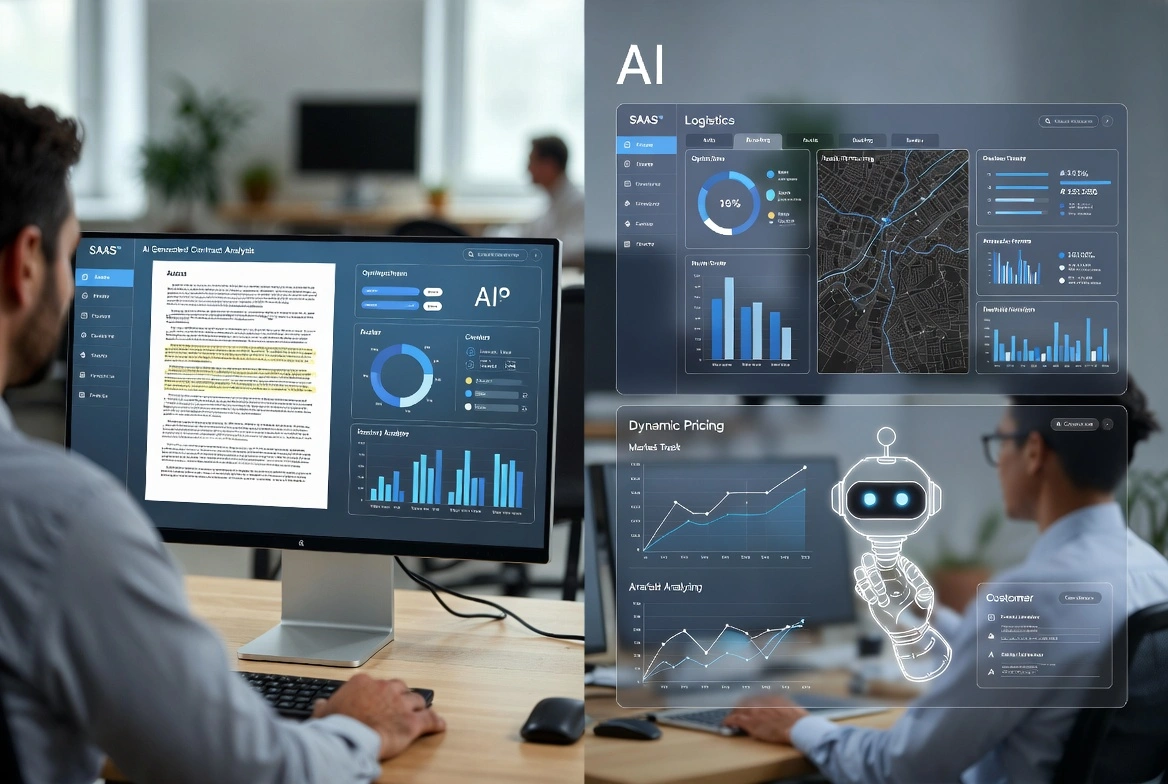
Most businesses face a fundamental choice: use off-the-shelf AI platforms or invest in custom AI development.
Off-the-shelf platforms get you started quickly but limit your competitive differentiation. Custom development creates unique capabilities but requires larger investment and longer timelines.
Here's how we help clients think through this decision:
Choose Off-the-Shelf When:
- You need to prove AI value quickly to internal stakeholders
- Your use case is common across many businesses
- You have limited technical infrastructure or support
- Speed to implementation is more important than competitive differentiation
Choose Custom Development When:
- Your competitive advantage depends on unique business processes
- You handle sensitive data that shouldn't leave your control
- You need AI that integrates deeply with existing proprietary systems
- You're building long-term competitive moats, not just operational efficiency
The Hybrid Approach
Many successful implementations start with off-the-shelf solutions to prove value, then migrate to custom solutions as requirements become clearer and stakes get higher.
This approach reduces initial risk while preserving options for strategic differentiation later.
The Team Transformation: Preparing Your People for AI Partnership
Technology implementations succeed or fail based on human adoption. Your team's relationship with AI will determine whether GPT-5.5 creates value or complexity.
The Trust-Building Process
Start by letting your team work alongside AI rather than being replaced by it. Customer service representatives who use AI to research answers quickly become advocates. Sales teams that use AI to prepare for client meetings see immediate value.
Employees who fear AI replacement often become allies when they experience AI as capability enhancement rather than job threat.
Training for AI Collaboration
Your team needs different skills for working with AI effectively:
- How to ask questions that get useful AI responses
- How to verify and validate AI outputs
- How to escalate situations where AI isn't sufficient
- How to provide feedback that improves AI performance over time
These aren't technical skills — they're collaboration skills. But they're essential for creating value from AI investments.
The Cultural Shift
Successful AI adoption requires cultural changes that go beyond training programs. Teams need permission to experiment, fail, and iterate. They need clear guidelines about when to trust AI outputs and when to exercise human judgment.
Most importantly, they need leadership that views AI as strategic investment rather than cost-cutting tool.
Your Next Steps: From Understanding to Implementation
If you've read this far, you're probably past the “should we explore AI” question and into “how do we implement AI effectively.”
Here's your practical next-step framework:
Week 1-2: Internal Assessment
Document your three most expensive operational problems. Not your most interesting problems — your most expensive ones. Calculate what these problems currently cost in time, money, and opportunity.
Week 3-4: Data Audit
Inventory what business data you have, where it lives, and how accessible it is. Most AI projects slow down during data preparation, not AI development.
Week 5-6: Technology Infrastructure Review
Assess whether your current systems can support AI integration. This doesn't mean you need enterprise-grade infrastructure, but you need realistic technical requirements.
Week 7-8: Strategic Planning
Based on your problem assessment, data audit, and infrastructure review, create a specific AI implementation plan with timelines, budgets, and success metrics.
Month 3: Begin Implementation
Start with proof-of-concept development focused on one specific workflow that creates measurable business value.
The Partnership Approach
We've learned that successful AI implementations require partnerships between business expertise and technical implementation. You understand your business problems better than any outside consultant. We understand AI development better than most business teams.
The magic happens when business insight and technical capability work together to solve real problems.
This isn't about us selling you AI consulting services. This is about you building sustainable competitive advantages using technology that actually works.
Looking Forward: AI as Strategic Business Asset
GPT-5.5 represents an inflection point where AI transitions from experimental technology to strategic business infrastructure. The businesses that recognize this transition and act thoughtfully will build competitive advantages that compound over time.
The businesses that wait for AI to become “easier” will find themselves competing against companies with 2-3 years of AI optimization advantage.
Your competitive window is open now. The question isn't whether to explore AI for your business — it's how quickly you can implement AI solutions that create measurable value.
The future doesn't belong to businesses with the most sophisticated AI. It belongs to businesses that solve their most important problems most effectively. AI is just the tool that makes better solutions possible.
Tizbi has been helping businesses navigate complex technology decisions for 28 years. We've seen companies win by moving early on strategic technologies, and we've seen companies struggle by waiting too long.
If you're ready to explore what GPT-5.5 can do for your specific business challenges, let's have a conversation. Not a sales pitch - a strategic discussion about your business problems and whether AI solutions make sense for your situation.
Because the best AI strategy isn't about implementing the latest technology. It's about solving your most important business problems more effectively than your competition.
Your business deserves that advantage.