Think about all of the hours you and your company have invested in the mind numbing task of data entry. Hunched over a computer, eyes burning from the screen, double and triple-checking that every decimal is in the right place and that there are no missing zeros.
The collection of data is indeed an important task, this is inarguable. In fact, within a company's stored data, an analyst can often find a treasure trove of useful information. From client forms to research results, data entry is a necessary element of company functioning.
However, it is similarly true that this type of work can be dreary and time-consuming. The task's results are not immediately gratifying, and employees may feel like they are wasting hours of their valuable time punching in data. Further, when conducting such a detail specific task, human error is nearly impossible to avoid. And yet, because data entry is rarely supervised, these errors aren't likely to be caught.
There is a clear issue with the commonly accepted data entry method, aka the manual method. Yet, the task of data entry can be vital to a company's future successes and isn't going anywhere in the foreseeable future. So, is there a solution that fixes the problem described above?
Of course! In this article, we shall explore an innovative solution that will streamline the data entry process. Discover how system integration may be the key to future successes, and significantly ease the process of data entry.
Table of Contents
- What is Data Entry?
- Why is Data Entry Important?
- How Do You Make Data Entry Easier?
- How Does System Integration Work?
- Frequently Asked Questions
- How Can Tizbi Help?

What is Data Entry?
Before we get into the bulk of information, it is important to clarify for anyone who may be wondering, "Why should I even care about this subject?"
The task of data entry is not incredibly hard to understand. Many industries heavily rely on data entry such as: healthcare, accounting, finance, retail, manufacturing (and so many more). Therefore, many people have a lot of personal experience performing it. Data entry is exactly what it sounds like. It is the act of inputting information into one organized format.
In today's day and age, most firms perform data entry digitally. It consists of professionals transferring paper copies to a spreadsheet or inputting client information into a form — often into an eCommerce platform, CRM, or ERP system built specifically around how the company works. The embrace of digital data entry revolutionized the process, creating a more organized, efficient, and error-proof system for compiling a project's critical information.
Why is Data Entry Important?
Different organizations use their data for various reasons. Therefore, companies will have unique motivations for prioritizing data entry. That said, there are a few general reasons why every company should take the process seriously and ensure it is being conducted properly.
Consider these reasons as the primary explanations for why data entry is important:
- Improve organization, compile data in one easily digestible document.
- Make company information available at any given moment.
- Eliminate archaic practices like storing old paper documents.
- Track company patterns. Analyze and predict company outcomes.
- Use information to stop any recurring mistakes.
- Train employees through data and improve efficiency.
- Imputing customer data is a form of data entry, essential for sales and shipping.
The exact purpose of data entry varies from industry to industry. However, there are enough general positive outcomes that can appeal to a wide array of projects.

How Do You Make Data Entry Easier?
Despite all of these reasons for why data entry is important, the task's positive contributions are not always readily available. And without immediate gratification, it can start to feel less like a massive benefit for your company's projects and more like a nuisance and a waste of time.
However, the point that needs to be stressed is that it doesn't have to be this way.
The surprisingly easy key to simplifying data entry is system integration.
Despite the modern world's recent turn to all things digital, simply plugging data into spreadsheets over and over again isn't enough to simplify the task. However, with system integration, an employee only has to enter the facts one time and the information will be stored forever, making it available for every project and program within a company's integrated network.
How Does System Integration Work?
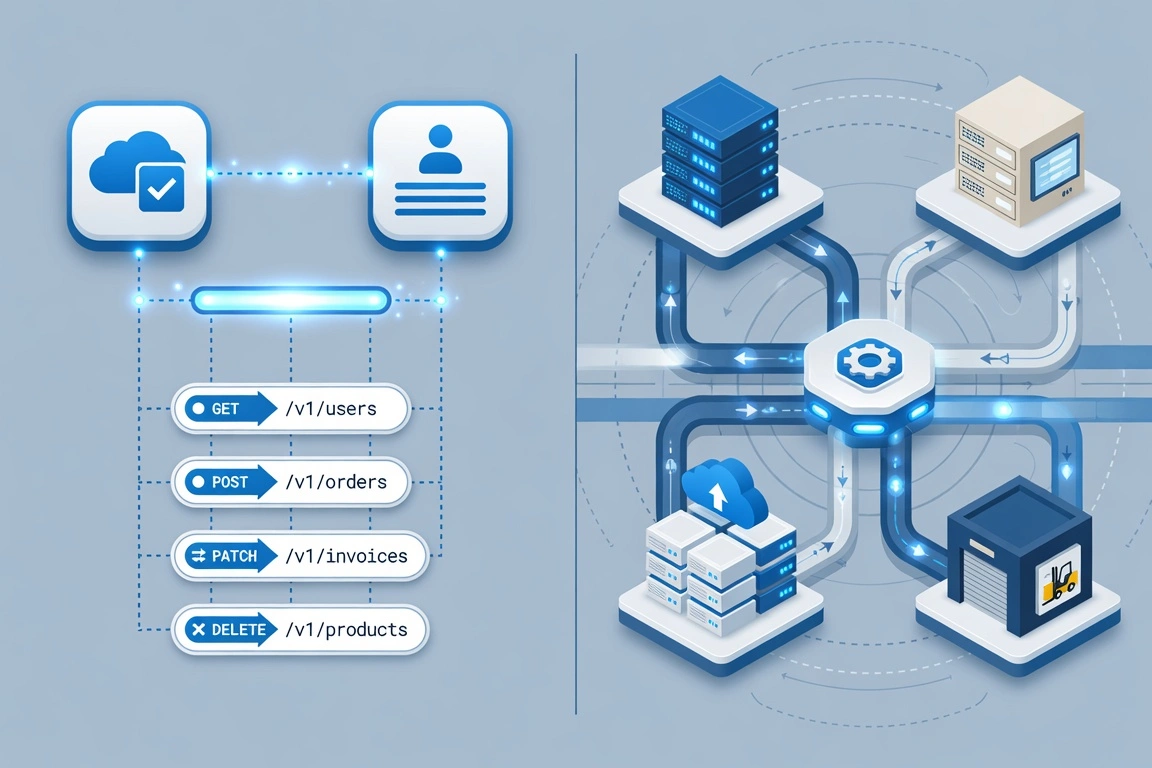
To clarify, system integration is a strategy that unites a project's components such as an eCommerce platform, CRM software, an ERP system, or an accounting system to bind them all together into one inter-connected mega-system. (If you're weighing this against a narrower point-to-point approach, see our comparison of API integration vs. system integration.)
This enables a seamless flow of relevant information from one program to the next in a way that saves time and reduces errors. You can think of system integration as an orchestra conductor connecting every individual instrument in a symphony.

System integration does more for a company besides saving resources. One less obvious effect includes how this new level of organization reflects on clients. If data-entry becomes more streamlined and efficient, customer orders can be processed faster and with reduced errors, making clients happier in the long run.
Collectively, the effect system integration has on a company's operations means a cleaner, safer, and better data entry method. Subsequently, this leaves a good impression on your clients.
If your company provides quality information and maintains neat record-keeping, this reflects positively on your company's image.
Frequently Asked Questions
What's the difference between data entry and system integration? Data entry is the manual act of inputting information into a system. System integration connects separate software programs so information entered once automatically flows between them. Instead of retyping the same data into multiple platforms, integration lets one entry populate every connected system, cutting duplicate work and reducing transcription errors.
Does system integration eliminate data entry completely? No - it eliminates redundant data entry, not data entry itself. Someone still needs to input information the first time. What integration removes is the need to re-enter that same information into a second, third, or fourth disconnected system, which is where most wasted time and human error actually occur.
What industries benefit most from integrating their data entry systems? Any industry handling high volumes of records benefits, but healthcare, finance, accounting, retail, and manufacturing see especially strong returns. These industries typically juggle multiple platforms - billing, inventory, compliance, customer records - where a single integration project can eliminate thousands of duplicate manual entries per month.
How long does a typical system integration project take? Timelines vary based on how many systems need to connect and how complex the existing infrastructure is. A straightforward two-system integration might take a few weeks; connecting several legacy platforms with custom data mapping can take longer. A proper discovery phase up front is what determines an accurate timeline.
Can system integration reduce human error, not just save time? Yes, and often this matters more than the time savings. Every manual re-entry point is a chance for a typo, a dropped field, or inconsistent formatting between systems. Integration removes those re-entry points, which means the data staying consistent and accurate across every connected platform, not just faster to input.
Is system integration only useful for large enterprises? No - small and midsize businesses often see a faster return on investment. Smaller teams typically have less staff capacity to absorb duplicate manual work, so eliminating redundant data entry frees up a proportionally larger share of available staff time compared to a large enterprise with dedicated data-entry personnel.
How Can Tizbi Help?
As your trusted software development experts, Tizbi understands how to help companies of all industries reach software goals. Whether you need a full IT consulting engagement or a focused integration project, we can help your firm improve its general performance, as well as streamline project data entry with system integration.
Contact us today to start planning your company's system integration. Don't lose any more data or waste any more time and resources. Start integrating your data today!